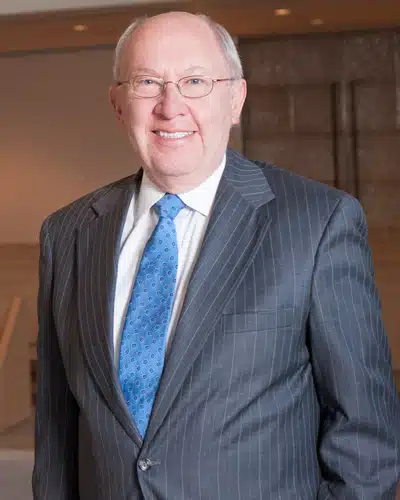
This is the first of two columns written by Don Knebel, president of ReCenter Indiana, providing a biblical perspective to the concerns of millennials and Generation Z. The second column examined biblical teachings on immigration and the use of military force.
By Don Knebel
ReCenter Indiana
February 24, 2026
Over the past few decades, the so-called “Christian Right,” aligned with the Republican Party, has convinced tens of millions of Americans that Christians care only about eliminating abortion, restricting the rights of gay people and putting the Ten Commandments in schools.
Because most young people disagree with these positions, they have been deserting our churches in droves. Those conservative stances may also be dissuading many of our young people from participating in the political process.
But a majority of young people in America do agree on five crucial issues that find express support in the Bible: income inequality, the right to health care, protecting the environment, the treatment of immigrants, and the use of military power. I will outline the views of our young people on these issues and show where the Bible explicitly supports those views – no interpretation necessary.
Today I will address the first three of those issues, since they have a direct role in the personal lives of young people today and into the future. In a later column, I will talk about the final two issues that bear witness to America’s treatment of “others,” both the people from other nations who want to build a new life here and our country’s actions while living among the other nations of the world.
According to recent estimates, there are more millennials and members of Generation Z (born between 1981 and 2012) than there are of Americans born before 1981. As more members of Gen Z reach voting age, the potential political power of young people will continue to grow. That is why their views, particularly on these issues, are so important.
In 2012, the Public Religion Research Institute, in conjunction with the Berkley Center for Religion, Peace and World Affairs, conducted a large-scale survey of college-age millennials. Of those surveyed, 73% agreed that “the economic system in this country unfairly favors the wealthy.” Nearly 70% believed the government should do more to reduce the gap between the rich and poor. Another 72% favored increasing the tax rate on taxpayers earning more than $1 million a year.
In 2022, the AAMC Center for Health Justice polled 1,510 members of Gen Z, from the ages of 18 to 24. The results regarding wealth disparities were the same as 10 years earlier. Seventy-three percent of all respondents, including 53% who identified as conservative, said the federal government should try to reduce the gap between the richest and poorest Americans.
The Old Testament is clear about the need for those with the means to share their wealth with the poor. Quoting from the New International Version, Leviticus 25:35-36 states: “If one of your countryman becomes poor and is unable to support himself among you, help him as you would an alien or temporary resident, so he can continue living among you. Do not take interest of any kind from him, but fear your God so that your countryman may continue to live among you.”
Those Scriptures mandated a formal mechanism of wealth redistribution, with the goal that “there should be no poor among you.” — Deuteronomy 15:4 The well-to-do were commanded to loan to those in need “whatever he needs.” — Deuteronomy 15:8 Every seventh year, those debts were to be forgiven, including the ones that had just been incurred. — Deuteronomy 15:9 When Jesus taught his followers to seek God’s forgiveness, “as we forgive our debtors,” he likely had those debts of the poor in mind. — Matthew 6:9-13
When a rich man, often described as a ruler, asked Jesus what to do to earn eternal life, he replied: “If you want to be perfect, go, sell your possessions and give them to the poor, and you will have treasure in heaven. Then come, follow me.” — Matthew 19:21 After his disciples questioned Jesus about this advice, he said: “But many who are first will be last, and many who are last will be first.” — Matthew 19:30
In one of Jesus’ parables, “a rich man . . . lived in luxury every day.” — Luke 16:19 A beggar named Lazarus lived at the rich man’s gate, “longing to eat what fell from the rich man’s table.” — Luke 16:20-21 When Lazarus died, “the angels carried him to Abraham’s side.” — Luke 16:22. When the rich man died, he was sent to Hades, “where he was in torment … in agony in this fire.” — Luke 16:22-24
Many politicians today condemn as “Socialism” any suggestion that the rich should share their wealth with those less fortunate. News flash! The earliest followers of Jesus “had everything in common. Selling their possessions and goods, they gave to anyone as he had need.” — Acts 2:44 As a result, “[t]here were no needy persons among them.” — Acts 4:34
Politicians who want to reach out to young people should start by focusing on reducing our income and wealth inequality.
In December 2022, the AAMC Center for Health Justice conducted a national poll of 1,510 members of Generation Z, then from ages 18 to 24, to learn what they thought of some of the social factors that influence health and health equity. Of all the respondents, 87%, including 77% who identified as conservative, said that access to health care is a basic human right.
After the 2024 election, Tufts University’s Center for Information & Research on Civic Learning and Engagement surveyed young people between 18 and 34 to determine which three issues mattered most to them. Concern about health care was ranked fourth and identified by 26 percent of those surveyed.
In his book, “Why the Christian Right is Wrong,” Robin Meyers, who also is a minister in the United Church of Christ, writes: “One of our most common folk aphorisms is this: if you don’t have your health, you don’t have anything. If that’s true, then what are we to make of a reputedly Christian nation that refuses to make health care a right instead of an economic privilege?”
Is there a biblical basis for viewing health care as a basic human right? Let’s take a look.
Ezekiel was a Jewish priest who was exiled to Babylon after the Babylonians captured Jerusalem. He wrote the book in the Old Testament that now bears his name, as he was trying to explain to the Jewish people why God had let this happen to them. His explanation used the metaphor of shepherds and their sheep, with shepherds being the people who had ruled Israel before the Babylonian conquest.
Here is what he wrote: “Woe to you shepherds of Israel who only take care of yourselves! Should not shepherds take care of the flock? You eat the curds, clothe yourselves with the wool and slaughter the choice animals, but you do not take care of the flock. You have not strengthened the weak or healed the sick or bound up the injured.” — Ezekiel 34:2-4 In other words, the Bible says God had allowed the conquest of Judah and the destruction of Jerusalem because its leaders had not taken care of the sick and injured.
For Christians, the life and teachings of Jesus should be important to the question of whether health care is a right and not a privilege. First, “Jesus went throughout Galilee, teaching in their synagogues, proclaiming the good news of the kingdom, and healing every disease and sickness among the people.” — Matthew 4:23 There is certainly no evidence that he healed only those with the money to pay him. In Jesus’ parable of the good Samaritan, the person injured on the Jericho Road did not pay for his care; instead, the Samaritan not only treated his wounds for free but paid for his later care. — Luke 10:34-34
After Jesus’ death, his disciples continued to have the power to heal that had been granted to them while Jesus was alive. They used this power to heal people who had no ability to pay. — Acts 3:1-10
A story by Axios in January, based on data from the United Health Foundation, looked at how the states rank with respect to the health of their residents. All of the 10 healthiest states, except Utah, voted for Kamala Harris in 2024. On the other hand, the 10 unhealthiest states, except New Mexico, voted for Donald Trump.
In his same book, Meyers writes: “Now, in order to save the country from a host of imaginary evils, the poorest Americans vote against their economic self-interest and seem more feverishly committed to the Republican agenda than society’s winners are.” Nowhere is this truer than with respect to health care.
Making health care available to all is another issue that strikes a chord with young Americans.
Recent surveys report that young people in America are concerned about climate change and its impact on them and on future generations. In this column, we will look at how young people view protecting our environment and the biblical passages from the New International Version that support those views.
In 2023, The Lancet conducted an online survey of young adults between 16 and 25 about their views on the environment. At least half of the respondents in all 50 states and Washington, D.C., reported being extremely or very worried that climate change is having an impact on the planet and its people. If you add those who are moderately worried, the percentage is overwhelming.
That same study asked respondents for their views on how the government was responding to their concerns about climate change. More than three-quarters said that the United States government is failing young Americans and betraying them and future generations.
A 2025 study conducted by the Institute for Sustainability & Social Justice at Sacred Heart University also asked young people about their views on climate change and its effect on them. Of the 1,500 U.S. residents aged 15 to 29 who were surveyed, 70% reported being somewhat or very worried about climate change.
A Pew Research study from 2023 asked people whether they favored phasing out the use of fossil fuels. Forty-eight percent of young people aged 18 to 29 were in favor of eliminating fossil fuels, more than twice the percentage of those over 65.
In his book, “Why the Christian Right is Wrong,” Robin Meyer, a minister in the United Church of Christ, writes: “There may be no single issue in our time that more fully reveals one’s true religious sentiment, or lack thereof, than one’s approach to the environment.”
Meyer is absolutely right about this. One of the key teachings of the Old Testament is that the Earth belongs to God and those on it are mere tenants, required to preserve it for future generations.
For example, according to Psalms, “[t]he earth is the Lord’s, and everything in it, the world and all who live in it.” — Psalm 24:1 According to Genesis, God put Adam in the Garden of Eden “to work it and take care of it.” — Genesis 2:15 According to Leviticus, “[t]he land must not be sold permanently, because the land is mine and you are but aliens and my tenants.” — Leviticus 25:23 “Throughout the country that you hold as a possession, you must provide for the redemption of the land.” — Leviticus 25:24 To preserve the land for future generations, the Israelites were commanded not to till their fields or prune their vineyards every seventh year. — Leviticus 25:4
The Israelites did not always follow these commands. In warning the Jewish people about what he predicted correctly would soon lead to their destruction by the Babylonians, the prophet Jeremiah wrote: “[God] brought you into a fertile land to eat its fruit and rich produce. But you came and defiled my land and made my inheritance detestable.” — Jeremiah 2:7
The Christian New Testament is not as explicit as the Hebrew Scriptures about the need to preserve the environment for future generations. But The Book of Revelation says that the judgment of the dead will include “destroying those who destroy the earth.” — Revelation 11:18
Politicians should not have to look far to find biblical teachings to give them helpful guidance on these key issues – sharing wealth, ensuring health care for all and protecting the environment – that mean so much to America’s young people.
Don Knebel is an attorney and member of Northminster Presbyterian Church as well as the president of ReCenter Indiana, Inc. a nonpartisan nonprofit dedicated to reminding all elected officials to center on the priorities of the people.
Dwight Adams, an editor and writer based in Indianapolis, edited this article. He is a former content editor, copy editor and digital producer at The Indianapolis Star and IndyStar.com, and worked as a planner for other newspapers, including the Louisville Courier Journal.
The views and opinions expressed do not necessarily reflect the views of The Indiana Citizen or any other affiliated organization.