By Marilyn Odendahl
The Indiana Citizen
December 19, 2025
Indiana legislative leaders on both sides of the aisle agreed affordability is a problem for many Hoosier households, but they disagreed on how to ease the strain on family finances and even how much state government should do to help.
The differences in perspectives and approaches came to the surface during a discussion about rising utility costs. A July 2025 study by Citizens Action Coalition found electric bills across the state had increased 17.5%, the largest year-over-year hike since at least 2005.
House Minority Leader Phil GiaQuinta, D-Fort Wayne, suggested eliminating the 7% sales tax that is tacked on to residential utility bills as a way to provide some immediate relief to Indiana consumers. However, House Speaker Todd Huston, R-Fishers, expressed concern about the government’s budget.
“I’m a little sensitive about the conversation about taking away the sales tax only because at the very moment you take away that sales tax, my friends will want to spend government money somewhere else,” Huston said.
GiaQuinta replied, “We give data centers … a sales tax exemption, so why can’t we do that for our consumers?”
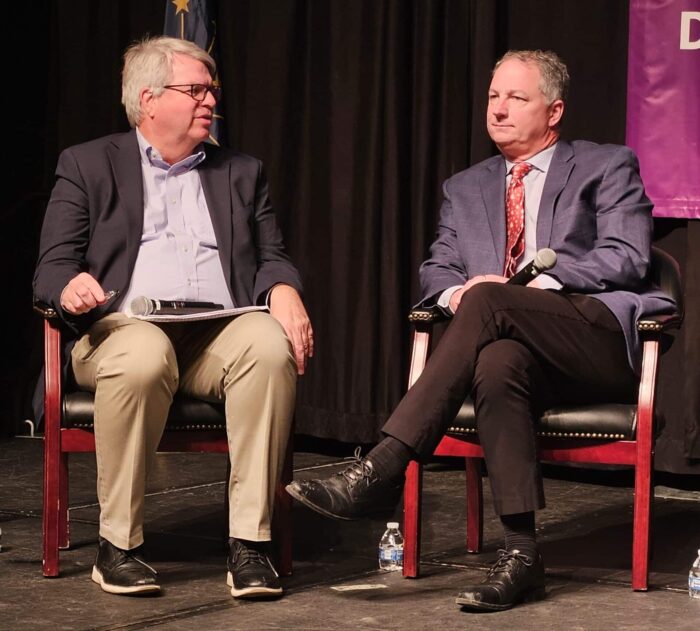
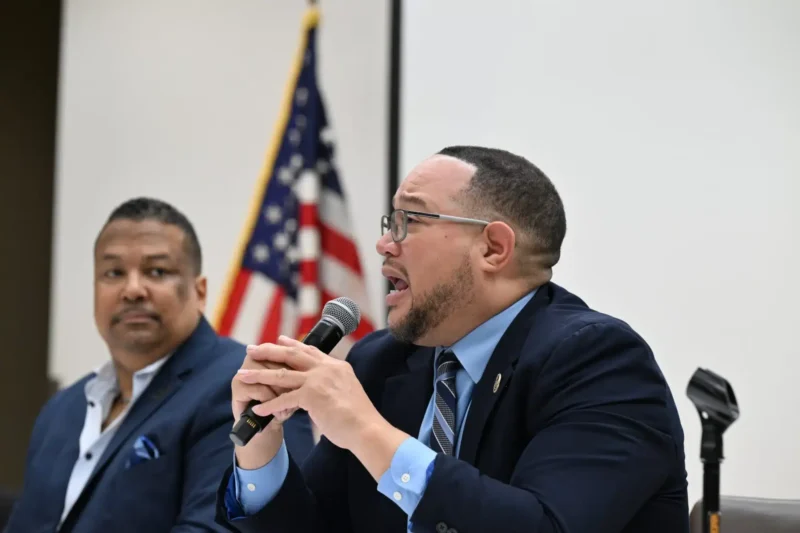
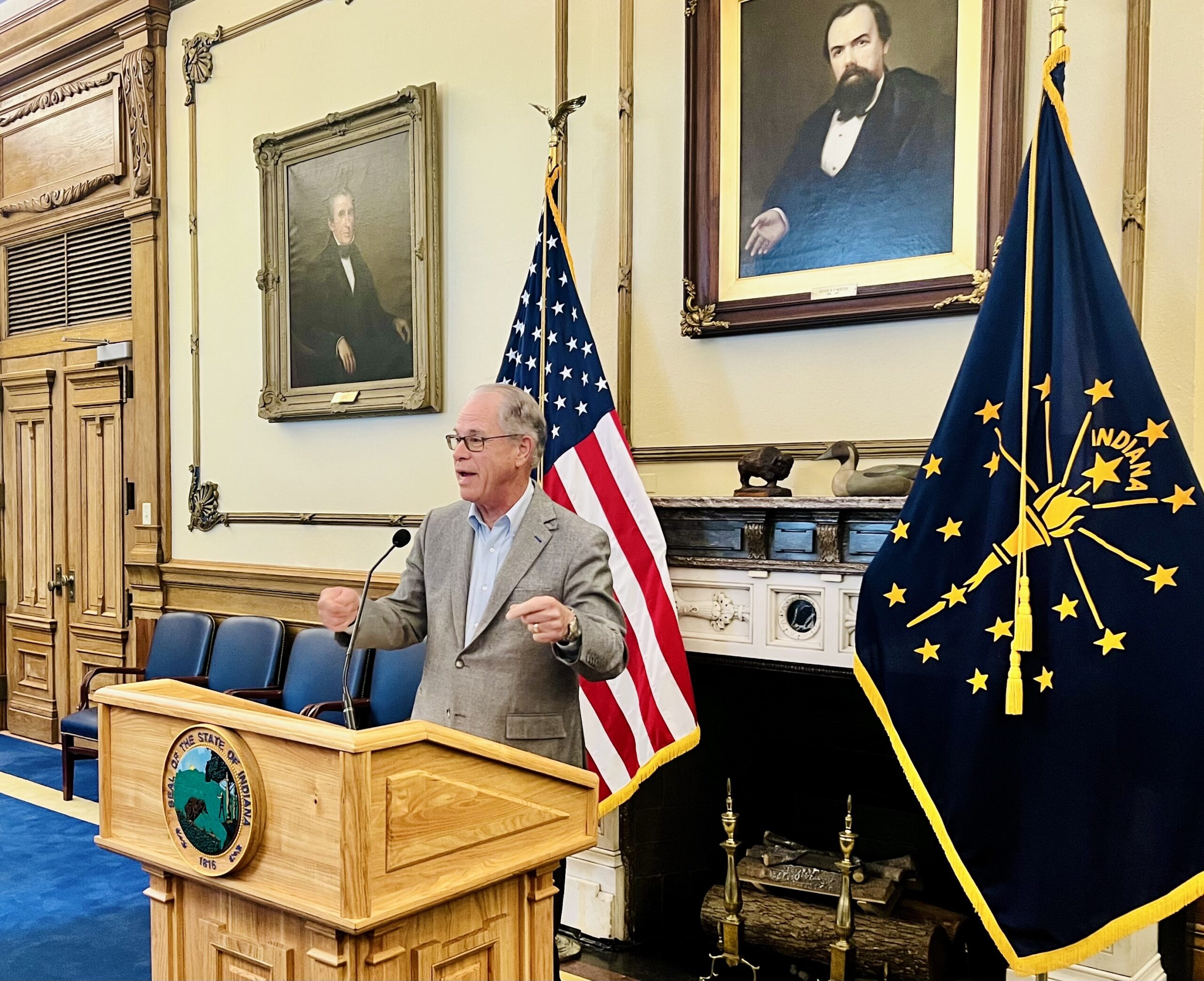
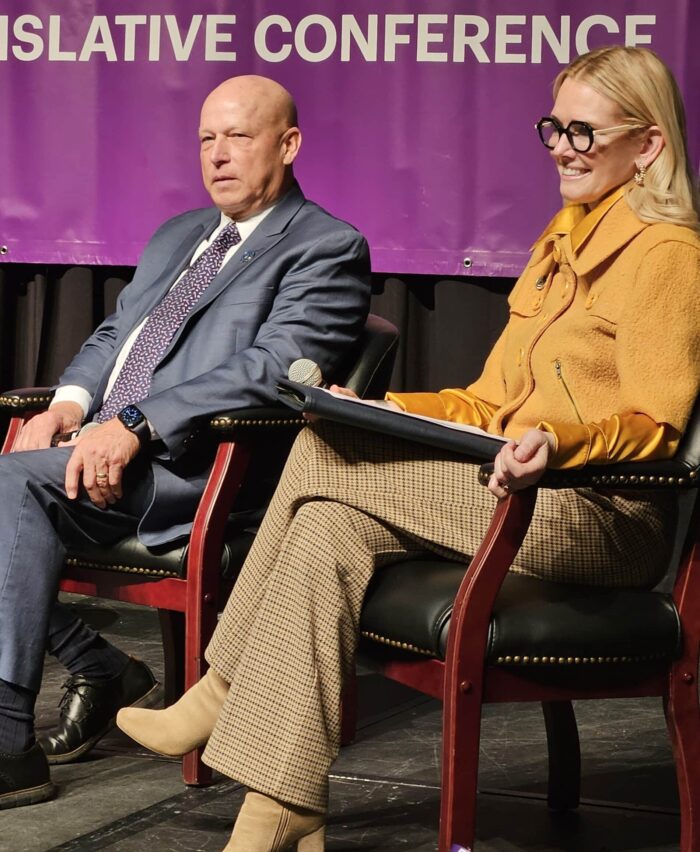
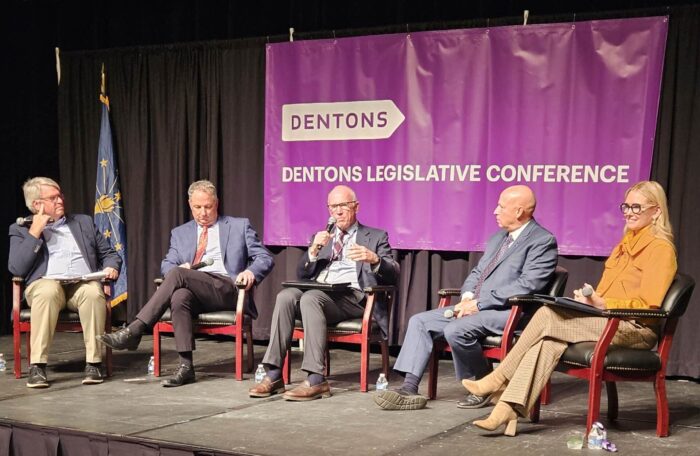
Huston and GiaQuinta spoke as part of the Dentons Legislative Conference held at the Indiana Convention Center on Thursday. The House leaders were joined on the legislative panel by Senate Minority Leader Shelli Yoder, D-Bloomington, and Senate Majority Whip Michael Crider, R-Greenfield.
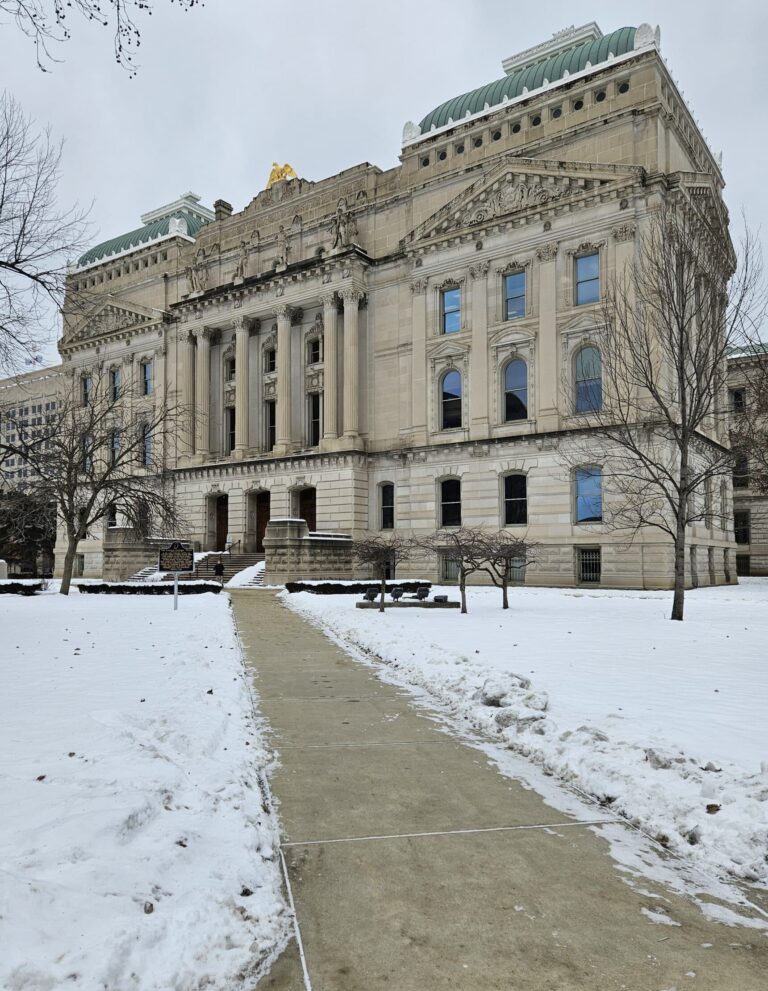
The Indiana General Assembly is scheduled to return to the Statehouse on Jan. 5, 2026, for what is expected to be a truncated session. Lawmakers actually started their work in early December, when they reconvened to debate, but then ultimately rejected, a bid to redraw the state’s congressional district map ahead of next November’s general election.
Bills are still being filed, but Democratic representatives and senators have continued to emphasize the cost of living. Throughout the redistricting fight, the minority party hammered on affordability and repeatedly said the supermajority in the legislature should be working to help Hoosiers struggling under rising costs, rather than reconfiguring a map.
Yoder reiterated the Democrats’ position during the panel discussion, saying she and her colleagues will be “laser focused on issues of affordability.” In particular, she said the party would be most attentive to utility bills, housing costs, accessible child care and affordable health care. The Democrats will be introducing legislation to ensure Hoosiers are not surprised by spikes in utility rates and make sure families can pay the mortgage or rent without busting their budgets. Also, she said, the minority party will be offering bills to address the need for more child care and to help Hoosiers with health insurance premiums that are skyrocketing.
“While costs are continuing to rise, what isn’t rising (are) the incomes of Hoosiers and we’re hearing it (from) pretty much every corner throughout Indiana,” Yoder said.
Huston said he agreed with Yoder that affordability should be a focus of the legislature. The Republican party, he said, is concerned about rising utility rates and health-care costs, and wants to encourage the development of more housing in communities across the state.
“You’ll see general alignment on the topics,” Huston said. “There might be just a little bit difference of opinions on the solutions.”
GiaQuinta and Yoder sketched out the legislation the members of their caucus are crafting to help Indiana households get some financial breathing room.
To help first-time homebuyers, Democrats are considering proposing the creation of a special savings account that would allow individuals to contribute and receive a tax break. Also, the minority party is looking at possibly taxing out-of-state buyers who are purchasing homes in Indiana and using that money to make low-interest loans to Hoosiers who are purchasing a house for themselves.
In addition to eliminating the sales tax on utility bills, Democrats are pointing to other fees and charges that utility providers are adding to residential ratepayers’ monthly statements. Consumers are also covering the costs of lobbying, litigation and membership dues to industry associations, Yoder said.
Also, Yoder said families on energy-assistance programs should be protected from having their electricity and gas service shut off during the extreme heat of the summer months, just as they cannot have their utilities disconnected during the cold winter months.
Child care in Indiana took a hit, when in October, the Family and Social Services Administration said it would not be issuing any new vouchers to low-income households until at least 2027. GiaQuinta called it a crisis and said child-care centers, which often taught the youngsters in preparation for school, were closing across the state, leaving families to rely on either relatives or friends for babysitting. As a potential solution, he said Democrats are looking at ways to offer tax credits to employers who help cover the cost of child care for their employees.
GiaQuinta noted the legislature will be wrestling with an abbreviated calendar because of the early December session. Bills must be passed out of their respective chambers by Jan. 29 and on their way to the governor’s desk by Feb. 24.
“It’ll be unlike any other,” GiaQuinta said of the 2026 session. “We’ll see how much gets accomplished, but we’ve got a lot of things to do.”
Huston did not provide many details about the affordability legislation that will be coming from Republicans.
To try to stabilize utility costs, Huston said two GOP lawmakers are working on a bill that would base rates on performance. Also, he said child care would be on the legislature’s agenda and that Republican House members are working on a bill to address the issue, but he did not provide any specifics. Housing and health care are getting attention as well, he said.
Still, Huston cautioned the General Assembly has to be careful when trying to help Hoosiers. He said the amount of money poured into the economy ignited inflation and regulation has led to shortages and higher costs in housing, child care and utilities.
“I think we can all agree we want to work on the affordability aspect,” Huston said. “I think we should remember who caused the affordability issue. That was government. So, I’m not sure government’s going to solve that issue.”
Yoder countered that Indiana cannot be successful when its residents are unable to provide for their families. The Hoosier State, she said, has always had the reputation of being an affordable place to live and work, but now many are saying they can no longer pay their bills.
“I think it is in our roles and responsibility to look at where we can address this with good policy,” Yoder said. “I think that the speaker said that maybe government got us here, but in Indiana, it’s been kind of a one-party system, so I hope that we can work together.”
Huston responded that he wanted to collaborate with Democrats to find some ways to help families. However, to illustrate the point he had been trying to make, he highlighted the current issue with housing. In Bloomington, he said, building a new house has been almost impossible over the last 10 years or more, which has created a supply problem and led to a spike in the price of homes. People are now saying the community has an affordability problem, he said, but the root of the problem is the decline in new housing starts.
Yoder noted government can have a role and pointed to a new neighborhood being built in Bloomington where the city’s old hospital used to be located. The development, which will have affordable homes, is the result of a partnership between the city of Bloomington, the developers and community partners in Monroe County.
“It is exciting,” Yoder said. “I hope they do a lot more.”
Health-insurance costs are rising for Hoosiers who either rely on employer-provided coverage or buy their own on the marketplace. Due to rising prices for medical care and prescription drugs, employers are facing the steepest price increase for health-care benefits in 15 years. Also, the expiration of the Affordable Care Act’s tax credits at the end of this year is expected to balloon the monthly premium payments for subsidized enrollees by more than 100%.
Huston said bills will be introduced in 2026 to try to tackle health-care costs, but the legislature has worked in a collaborative and bipartisan manner in previous sessions to address the same issue, so now “we probably need to let some stuff bake.” Lawmakers, he said, have tried to contain costs and they need to continue to collect the data to see if the reforms put in place are having any effect.
While this session may be quiet on health care, he said, the next session will be consumed by the issue because of coming changes to Medicaid.
“I think we’re all going to have to be on our ‘A’ game,” Huston said of 2027, “to figure out, as the appropriate responsibility is shifted from the federal to the state level in regards to Medicaid, … how we respond to that.”
GiaQuinta and Yoder both stressed that insurers had to be at the table, participating in conversations about reducing costs. Yoder noted that the legislature has done a great deal of work to address prices from a hospital standpoint, but at the end of recent sessions, many have questioned why the insurance companies have not been included.
The Democratic leaders floated ideas for controlling costs by possibly deprivatizing Medicaid and letting the state insurance commissioner cap rates based on affordability.
Echoing Huston, GiaQuinta said the General Assembly has to be thoughtful and carefully consider the bills being filed, even though the session will be quick.
“I do think that if you rush through legislation, you end up making harmful mistakes,” GiaQuinta said. “So, we’ve got to be very careful about that.”
Dwight Adams, an editor and writer based in Indianapolis, edited this article. He is a former content editor, copy editor and digital producer at The Indianapolis Star and IndyStar.com, and worked as a planner for other newspapers, including the Louisville Courier Journal.
The Indiana Citizen is a nonpartisan, nonprofit platform dedicated to increasing the number of informed and engaged Hoosier citizens. We are operated by the Indiana Citizen Education Foundation, Inc., a 501(c)(3) public charity. For questions about the story, contact Marilyn Odendahl at marilyn.odendahl@indianacitizen.org.