
By Marilyn Odendahl
The Indiana Citizen
March 24, 2026
Election bills Indiana legislators passed this year did not ignite much controversy or generate threats of a lawsuit, but some voting laws enacted in prior sessions might still be causing confusion and prevent some Hoosiers from casting a ballot this year.
Bills that the legislature sent to the governor in February included provisions to preserve election materials longer and to list school board candidates in alphabetical order on the ballot. A few measures did stir some consternation among voter-rights advocates, such as House Enrolled Act 1377, which expanded straight ticket voting, and House Bill 1359, which was saddled late in the session with an amendment that cut the early voting period to two weeks. HB 1359 stalled when it reached the Senate floor.
Listing legislation from past sessions that implemented a proof-of-citizenship requirement, banned college students from using their school IDs to vote and signed Indiana onto the push for an Article V convention, Julia Vaughn, Common Cause Indiana executive director, described the 2026 session as “pretty quiet.”
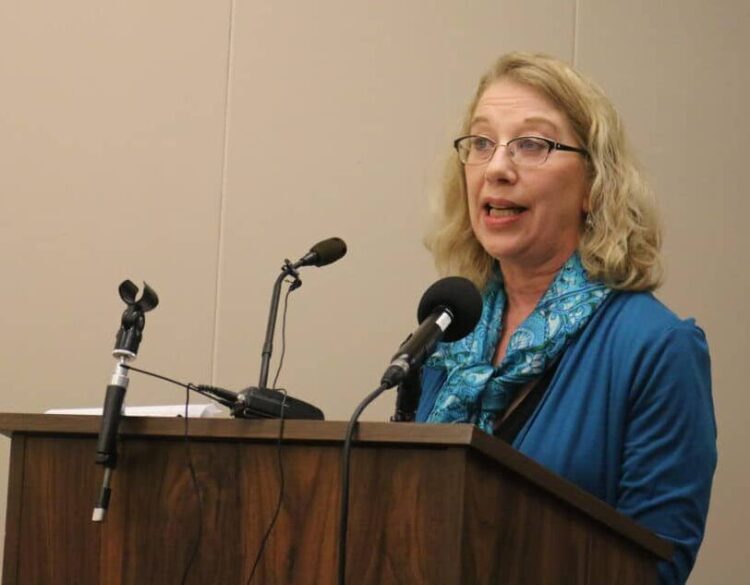
“I think voters fared pretty well this year compared to past sessions,” she said.
Of course, the “huge win,” Vaughn said, was the defeat of midcycle redistricting. Authored by Rep. Ben Smaltz, R- Auburn, House Bill 1032, which redrew Indiana’s nine congressional districts to favor Republican candidates in the upcoming mid-term election, pulled lawmakers to the Statehouse in December for a tense and difficult two weeks.
Despite a pressure campaign by President Donald Trump to make all nine of Indiana’s congressional seats red, several legislators in the Republican supermajority joined Democrats to squash the bill.
Vaughn expected hard feelings from the redistricting battle would linger between lawmakers when the session resumed in January. However, she said, people on both sides of the aisle appeared to have a strong desire to get out of the national spotlight and move on.
“They do have an amazing ability to fight like cats and dogs, and then come back together,” Vaughn said of Indiana legislators.
Casualties of the fight were Senate Bill 53, authored by Sen. Fady Qaddoura, D-Indianapolis, and Senate Bill 194, authored by Sen. Greg Walker, R-Columbus, which would have placed some guardrails around redistricting. Since neither bill even received a committee hearing, Vaughn suspects lawmakers did not have the appetite to revisit the subject again.
When the legislature resumed its work in January, the House Elections and Apportionment Committee was assigned 15 bills and two House Joint Resolutions, authored by representatives, but only put five of those bills on its agenda. The Senate Elections Committee was handed 11 bills and one resolution introduced by senators but put just seven on its agenda. In total, seven bills – five from the Senate and two from the House – passed both chambers and were signed into law by Gov. Mike Braun.
The bills that have become law are as follows:
Among the bills that received a hearing but ultimately did not get to the governor’s desk were two that sparked concern among voter-rights advocates and some lawmakers. The bills were:
Other bills that passed through their respective chambers but then lost momentum were:
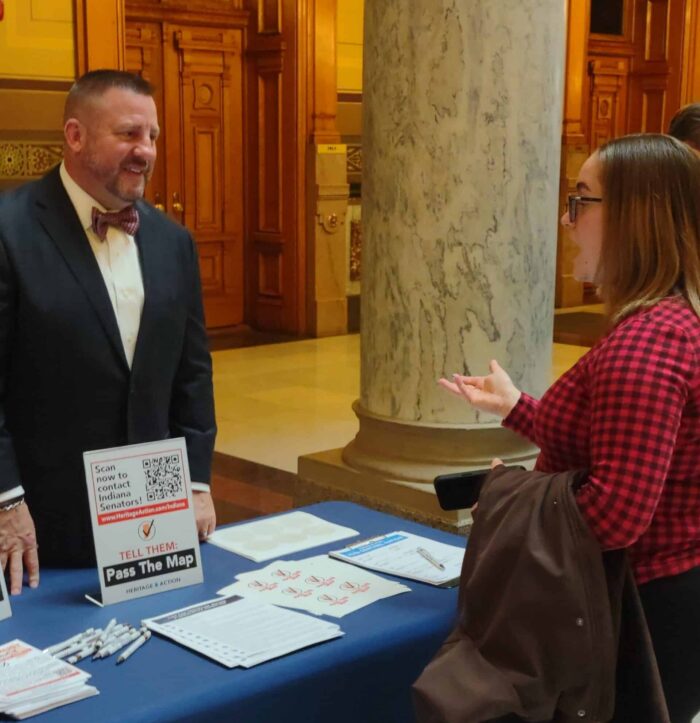
The passage of SEA 12, authored by Sen. Blake Doriot, R-Syracuse, which banned ranked-choice voting, was one of the few wins that Heritage Action, sister organization to the conservative think tank Heritage Foundation, tallied this legislative session. Paul Lagemann, a lobbyist for Heritage Action, said the organization was pushing seven different pieces of legislation, but SEA 12 was one of just two that survived what he called “a bloodbath” because of the number of bills that died this session.
Under ranked-choice voting, voters rank all the candidates for a particular office instead of choosing just one. The voting process continues until one of the candidates receives a majority of the votes.
Although Indiana does not use ranked-choice voting in elections, Lagemann said the law was necessary to prevent the method from being ushered in through the courts. He echoed the testimony of the opposition during the Senate committee hearing, saying this kind of voting is confusing to people and can lead to a candidate being elected to office who was not the voters’ first choice.
Ranked-choice voting, Lagemann said, typically appears first in municipal elections before spreading to elections of state lawmakers and officials. Now that SEA 12 has been signed into law, Indiana has a safeguard that clearly states this method of voting is prohibited in the Hoosier State, he said.
“What we wanted to do was really keep that camel’s nose from getting under the tent,” Lagemann said. “We’ve seen this across the country. You’re only one court case away … and if a judge would see fit, you could have ranked-choice voting pop up and happen in Indiana.”
Vaughn said the passage of SEA 12 was a setback, but added that advocates and voters did not lose much because no one was actively pushing the legislature to adopt that method of voting. She suspects Indiana’s supermajority got behind the bill, possibly, to placate the conservative right.
“I think those groups needed a win,” Vaughn said. “They are normally quite successful inside the Statehouse. After their somewhat-humiliating defeat on redistricting, I think their friends inside the Statehouse were looking to give them a cookie.”
In addition to the expansion of straight-ticket voting, Vaughn said Common Cause Indiana was disappointed that HB 1256, authored by Rep. Ed Clere of New Albany, got snared in “partisan pettiness.” The bill, which addressed campaign finance reports, sailed through the House with no opposition but got marooned in the Senate, when Clere announced he was leaving the Republican party and running for the mayor of New Albany as an independent.
HB 1256 would have brought some transparency to local elections, Vaughn said. By putting campaign finance information into readable reports and posting them on the county clerk’s or the county election board’s website, voters would have been able to see the individuals and organizations contributing to local candidates.
This information could be particularly important, Vaughn said, as more data centers are being proposed across the state.
“I guarantee you that these data center companies are investing in local politicians as well as … in the campaigns of statewide and legislative candidates,” Vaughn said. “So, it’s more important than ever that citizens have easy access to these reports.”
With many incumbents drawing opponents both in elections this year, several races will provide voters with a choice. However, Common Cause Indiana is worried some eligible Hoosier voters might not be able to cast a ballot because of recent changes to the state’s election laws that now require certain individuals to provide proof of citizenship when they register to vote and ban college students from using their school IDs to confirm their identify at the polling place.
Those laws are being challenged in the Southern Indiana District Court by voter-rights advocates who claim the state statutes violate the U.S. Constitution. Plaintiffs in the student ID case filed a motion for a preliminary injunction in February, asking the court to act before the May 2026 primary. Plaintiffs and defendants in the proof of citizenship case have been arguing over a discovery dispute while the court is considering a motion to dismiss filed by the state.
Vaughn said Common Cause Indiana will be doing research after the election to gauge the impact of a provision regarding absentee ballots in House Enrolled Act 1680, which was signed into law in 2025. The nonprofit fears a significant number of votes could go uncounted because the provision requires counties to reject any absentee ballot that does not contain “an accurate date of signature.”
Not only does the law not define “accurate date,” Vaughn said, it also does not provide any process for voters to fix or cure their ballots. She noted some voters mistakenly put their birth date on their absentee ballot and she questioned whether ballots with a date written in European style – with the day before the month – would be tossed. Moreover, the voters would never know if their absentee ballots are rejected for an inaccurate date.
“These are people that have made a special effort (to vote),” Vaughn said of absentee voters. “They filled out that application for the ballot, they filled out the ballot, they bought a stamp, they sent it back. They just made one really small mistake and the least the county could do is offer them the opportunity to cure their ballot. But that is not what the law requires.”
Dwight Adams, an editor and writer based in Indianapolis, edited this article. He is a former content editor, copy editor and digital producer at The Indianapolis Star and IndyStar.com, and worked as a planner for other newspapers, including the Louisville Courier Journal.
The Indiana Citizen is a nonpartisan, nonprofit platform dedicated to increasing the number of informed and engaged Hoosier citizens. We are operated by the Indiana Citizen Education Foundation, Inc., a 501(c)(3) public charity. For questions about the story, contact Marilyn Odendahl at marilyn.odendahl@indianacitizen.org