By Marilyn Odendahl
The Indiana Citizen
December 4, 2025
In touting a recent settlement that gives the state access to an enhanced federal system for verifying immigration status, Indiana Secretary of State Diego Morales’ office revealed it had turned over nearly 500,000 Hoosier voter registrations to the U.S. Department of Homeland Security.
The settlement, filed on Nov. 28, stemmed from a lawsuit Morales and Indiana Attorney General Todd Rokita brought against Homeland Security in April and is linked to the settlement of similar cases filed by Florida, Iowa and Ohio. Morales and Rokita said the resolution of the case will enable all states to upload bulk data into DHS’ Systematic Alien Verification for Entitlements (SAVE) program, which, they say, will help verify the citizenship and immigration status of Indiana voters.
According to a joint press release issued on Wednesday, Dec. 3, from Morales and Rokita, the “verification process enshrined in the settlement” identified at least 165 noncitizens as having registered to vote in Indiana. At least 21 of those individuals have cast ballots in “recent elections.”
The settlement ends a dispute that began in October 2024, when Morales and Rokita sought to verify the citizenship status of 585,774 Hoosier voters. They had submitted the list of voters to U.S. Citizenship and Immigration Services, which is part of Homeland Security, shortly before last year’s president election, but when the agency did not respond, they filed the lawsuit.
Morales’ office told The Indiana Citizen that the 165 individuals were identified from a “new list” of 488,030 voter registrations the state submitted to the Department of Homeland Security. The registrations were “uploaded into the enhanced SAVE platform that contain registrations with the last four digits of Social Security numbers,” the office said.
However, the secretary of state’s office was unclear whether the list of 488,030 voter registrations were pulled from the list of 585,774 names submitted to USCIS in 2024. In response to a question asking for clarification, the office replied, “Any active voter with the last four (digits) of their social security number on the list from 2024 was on the list uploaded. To our knowledge the number of non-citizen registrants identified are unique and not duplicates.”
Of the 165 individuals, the secretary of state’s office said 164 had voter registrations that were either active or inactive. One voter registration was in canceled status.
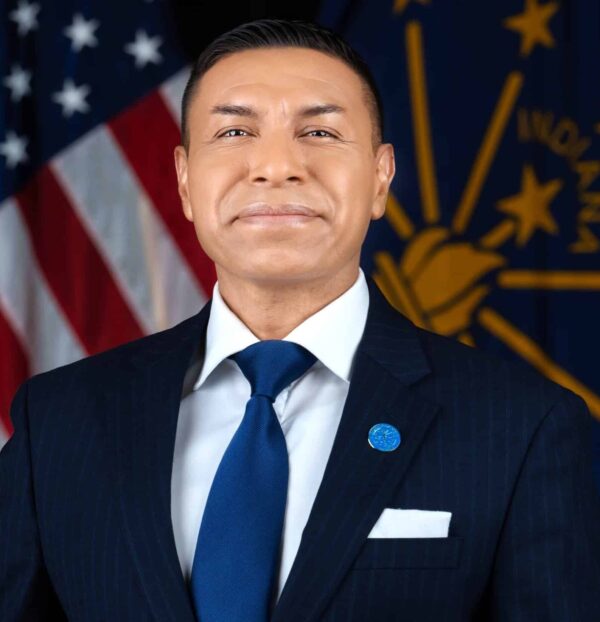
“This landmark settlement provides Indiana with long-overdue tools to protect the integrity of our elections,” Morales said in the press release. “Hoosiers deserve absolute confidence that every lawful vote counts and that our voter rolls are accurate and secure.”
However, a data privacy legal expert called Indiana’s lawsuit and settlement wasteful and an invasion of privacy rights.
John Davisson, director of litigation for the Electronic Privacy Information Center, said other states, such as Texas and Louisiana, did not sue the federal government but still were accessing the SAVE system long before the settlement in the Indiana case was reached.
Moreover, Davisson said, the SAVE system is relying on information from the Social Security Administration, which he said is an inaccurate and unreliable way to verify citizenship status. Consequently, Indiana could face lawsuits from Hoosiers falsely identified as being ineligible to vote.
“Step one would be to stop using this system for the purpose of determining who is a valid registered voter,” Davisson said. “The data set is not built for that purpose. It is error-prone. It will result in people most likely having their voting rights burdened or denied.”
Under the terms of the settlement, the federal government is allowing the states to conduct searches on the SAVE system using the last four digits of individuals’ Social Security numbers. Also, the feds said they will ensure that the SAVE system will be able to provide data supporting each verification and will be able to obtain citizenship and immigration-status information when given an individual’s name, date of birth and a government-issued identifier, such as a naturalization certificate number or full or partial Social Security number.
In return, the four plaintiff states, which includes Indiana, may negotiate a new information-sharing agreement with Homeland Security and other federal agencies in order to assist in improving and modernizing the SAVE system.
Davisson said the enhanced SAVE system created by the Trump administration is flawed and the information the system provides is likely not reliable. In particular, the largest source of data being piped into SAVE is from the Social Security Administration, but that agency “has historically been very clear,” he said, that its information should not be used to determine citizenship status.
Naturalized, or derived, citizens who are paying into Social Security do not have to update their citizenship information with the Social Security Administration until they are ready to draw benefits, Davisson explained. That’s because the agency only needs to know an individual’s status when the benefits are being dispersed.
“So, as a result, (the Social Security Administration) has several million inaccurate citizenship records,” Davisson said. The data is “there for the (Social Security Administration) to provide benefits, to disperse benefits. It’s not there for the purpose of determining who is and who isn’t a noncitizen.”
Potentially, Davisson noted, U.S. citizens who have become eligible voters through the naturalization process or by other legal means, could be wrongly barred from the ballot box. He said the “expensive and burdensome verification measures” are finding few noncitizen voters and are wasting state resources.
“It is a threat to fundamental rights,” Davisson said of using SAVE to verify citizenship status. “It is a gross invasion of privacy, and it’s something that Indiana, as with every other state, should just not be in the business of doing. I think a voter whose registration was wrongly canceled – and, again, that is a very likely outcome with some of these queries as a result of these SAVE searches – would very possibly have a valid constitutional claim against the state.”
Morales and Rokita have been raising concerns about noncitizens voting in Indiana’s elections since late last year.
In announcing the settlement, Rokita defended his and Morales’ actions, despite little evidence of many noncitizens voting in elections.
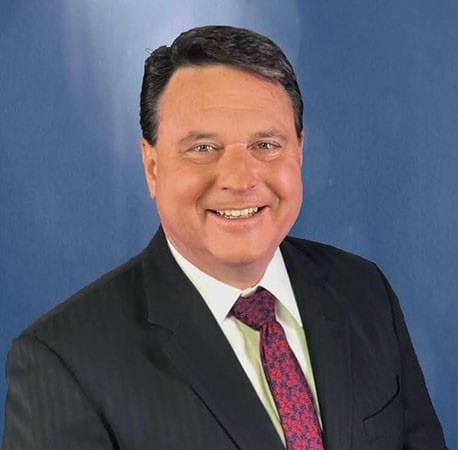
“From day one, many individuals dismissed our work as a ‘witch hunt’ – but the facts speak for themselves: non-citizen voting is real here in our state, and even one illegal ballot undermines the trust we are told to have in our election processes and even the Republic itself,” Rokita said in the press release.
Less than a month before the November 2024 presidential election, Morales and Rokita announced they had asked U.S. Citizenship and Immigration Services, a division of Homeland Security, to verify the citizenship status of 585,774 registered Hoosier voters. Morales said at the time that getting verification was important “to maintaining the integrity of our elections.”
When the federal government did not respond to the request, the secretary of state and attorney general sued in April, asserting the Department of Homeland Security was not fulfilling its statutory duty and asking the federal court to compel the federal agency to “immediately and continuously” provide the citizenship status of Indiana voters. Indiana’s complaint filed in the Southern Indiana District Court was similar to lawsuits filed first by Florida and then later by Iowa and Ohio.
In July, Morales announced his office had signed a memorandum of agreement with USCIS, which allowed Indiana to use the SAVE system to determine the citizenship status of individuals who were either registering to vote or already listed on Indiana’s registration rolls. Also, in September, Morales said his office, in consultation with Rokita’s office, had complied with a request from the Trump administration and turned over the state’s entire list of registered voters to the U.S. Department of Justice.
The 21 voters identified as noncitizens are the first Morales and Rokita have publicly said were found through the state’s use of the SAVE system. A noncitizen voter Morales previously highlighted in September was discovered during a review of the Indiana Bureau of Motor Vehicles’ records of individuals with temporary driving credentials.
Morales’ office did not clarify whether the 21 individuals are now being asked to provide proof of citizenship or are being prosecuted for violating the state’s law against noncitizens registering and voting in elections. Instead, the office said it would provide more information regarding referrals to law enforcement “in the near future.”
In his statement accompanying the settlement announcement, Rokita indicated the secretary of state would take immediate and decisive action based on the information from the SAVE system.
“This settlement delivers the federal access we’re entitled to under law, allowing the Secretary of State to swiftly remove ineligible voters from the rolls and fortify our system against future risks,” Rokita said in the press release. “Indiana’s elections will be more transparent, fairer and more secure as a result.”
The Indiana Citizen Education Foundation, parent of The Indiana Citizen, filed a lawsuit against the offices of the secretary of state and the attorney general in September, seeking access to the list of 585,774 voter registrations that was submitted to USCIS. Represented by the Reporters Committee for Freedom of the Press, The Citizen claims the defendants are unlawfully denying the right to inspect the list.
The case is still pending in Marion County Superior Court.
The Electronic Privacy Information Center and the League of Women Voters filed a class action against Homeland Security, the Social Security Administration and the Justice Department in September over the changes being made to the SAVE system. The plaintiffs assert that the Trump administration has been pooling sensitive personal data of Americans into large databases, which can then be used to surveil and investigate individuals across the country.
Claiming the creation of such comprehensive databases is a violation of the U.S. Constitution and the Privacy Act of 1974, the plaintiffs are asking the U.S. District Court for the District of Columbia to require the federal government to dismantle the “interagency national data bank.”
The settlement in the Indiana case will have no impact on the class action, Davisson said, but the outcome of the class action could upend the settlement. He pointed out the case is continuing and what, if any, relief the federal court might impose is unknown, but Indiana and the other states could lose access to the SAVE system.
“If the court says, ‘Department of Homeland Security, you cannot disclose this information to states,’ it doesn’t matter what kind of terms they reached in a settlement…,” Davisson said. “(DHS) is going to be prohibited from that disclosure.”
The League of Women Voters declined to comment for this story.
Indiana’s case against Homeland Security had not made much headway in federal court. Homeland Security been granted more time to file its answer to the complaint and then the litigation was stayed during the government shutdown that started Oct. 1 and ended Nov. 12.
On Dec. 1, Indiana filed a motion for voluntary dismissal, which the court granted the same day. The filings do not indicate and Rokita’s office did not respond to questions as to how much the litigation cost the state and whether the settlement with DHS includes the payment of court costs and attorney fees to the plaintiffs.
Dwight Adams, an editor and writer based in Indianapolis, edited this article. He is a former content editor, copy editor and digital producer at The Indianapolis Star and IndyStar.com, and worked as a planner for other newspapers, including the Louisville Courier Journal.
The Indiana Citizen is a nonpartisan, nonprofit platform dedicated to increasing the number of informed and engaged Hoosier citizens. We are operated by the Indiana Citizen Education Foundation, Inc., a 501(c)(3) public charity. For questions about the story, contact Marilyn Odendahl at marilyn.odendahl@indianacitizen.org.