This story was originally published by Capital B Gary.
By Calvin Davis
Capital B Gary
February 10, 2026
What began as a handful of frustrated Facebook posts has turned into a digital pressure cooker.
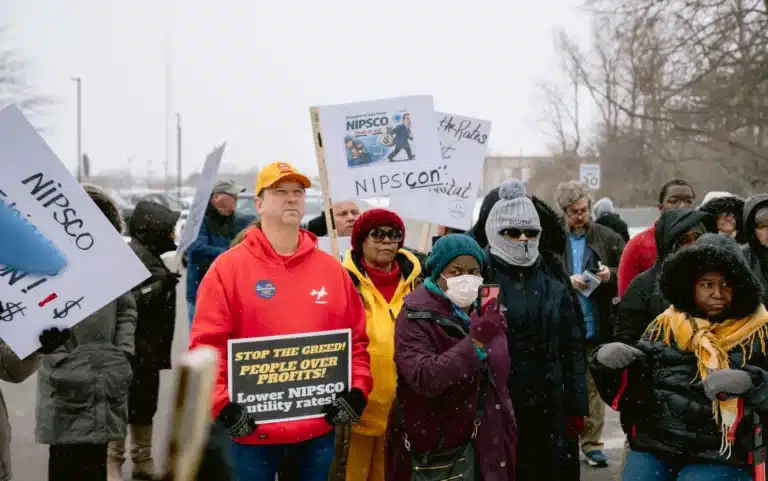
In recent weeks, a Northwest Indiana Facebook group dedicated to rising NIPSCO bills has swelled with screenshots of triple-digit increases, stories of skipped groceries and late rent, and calls for action. Demonstrations have followed, including in Valparaiso and Hammond.
At the most recent protest, held last week outside NIPSCO’s Merrillville headquarters, residents bundled against the cold to demand answers and relief from soaring bills. Hoisting handmade signs reading “Your prices are freezing families,” “Stop the greed,” and “People over profits,” they turned the sidewalk into a chorus of frustration as passing drivers honked their horns in support.
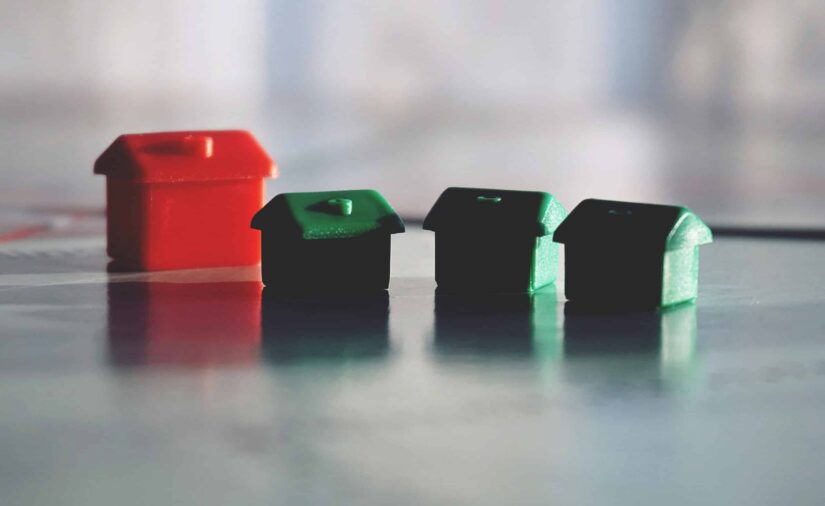
Since it was created just three weeks ago, the Facebook group NIPSCO Monopoly Madness has amassed more than 29,000 members and fueled a petition that has now gathered more than 60,000 signatures demanding relief from soaring utility costs.
One woman from Gary, who asked not to be named for fear of retaliation, said she attended the protest because her relatives’ bills had nearly doubled.
“It’s the wintertime. This is the worst time,” she said. “We need help.”
Elected officials have also joined the demonstrations. North Township Trustee Adrian Santos, whose office serves Hammond, East Chicago, Whiting, Highland, Munster, and much of Griffith, said his township has seen an influx of residents seeking help with utility costs.
“I see seniors, I see veterans, I see mothers and fathers coming into my office deciding on how are they going to pay for NIPSCO when their bills are double or triple in some cases,” Santos said during remarks at a recent protest.
For many residents across Northwest Indiana, the higher bills are not just about using more heat this winter. Over the past few years, state regulators have approved rate increases to help utilities pay for power plants, grid upgrades, and other long-term projects. Now some customers say those costs are showing up all at once on their monthly bills, and they are trying to figure out how to keep up.
At the same time, regulators are investigating NIPSCO due to “billing discrepancies” tied to faulty gas meter readings, and lawmakers are debating whether to step in as frustration grows.
NIPSCO said it does not mark up the cost of natural gas and that charges fluctuate with use. “Those prices come directly from market prices, and we simply pass them through based on customer usage,” the company said in a statement. “This part of the bill changes based on how much gas a customer uses, so bills are typically higher in the winter heating months than in warmer months as more natural gas is utilized to heat the home.”
Kevin Mejia, an organizer of the protests, said many residents are still trying to understand what assistance exists and whether they will lose service.
“The big concern people have now is, ‘Am I going to get cut off?’” Mejia said. “What are the assistance programs that are being offered, and how am I able to be eligible for those assistance programs?”
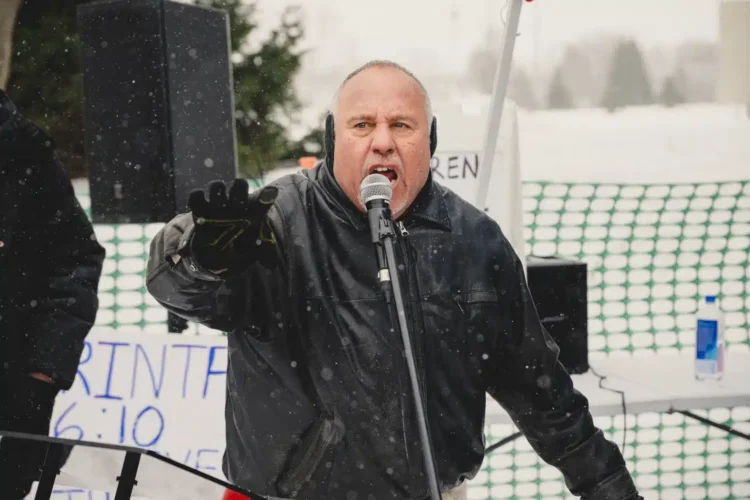
As frustration has grown, some residents have begun calling for more confrontational forms of protest, arguing that the cost of utility infrastructure and economic development is being shifted onto everyday ratepayers.
“Don’t pay your bill,” Valparaiso resident Carmelo Reyes exclaimed from the microphone during a protest outside NIPSCO’s Merrillville headquarters.
“Hit them where it hurts in the pocketbooks and let them feel the pain,” Reyes said. “Why are we paying this? We are paying this money to help subsidize all the data centers and all the crap they’re putting on us. We don’t have to accept it.”
For Reyes and other Northwest Indiana residents, the bills feel less like a seasonal jump and more like something that has been building for years. They say the increases are landing at a time when groceries, rent, and everything else are already up, leaving some families deciding which bills to pay first.
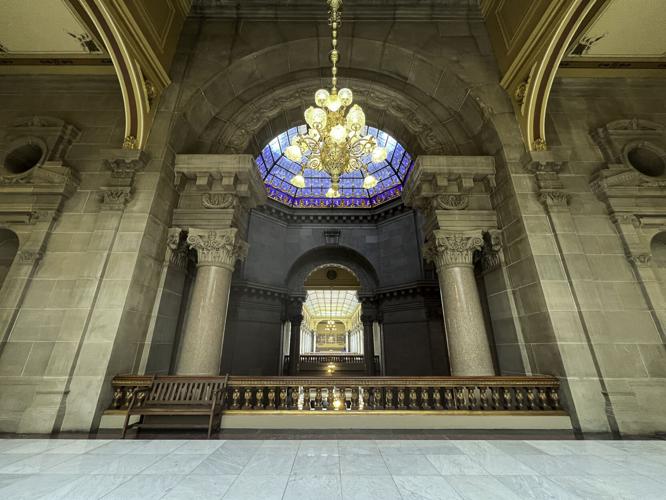
While much of the ire of residents has been directed at the utility company, their search for relief has pointed them toward elected officials, particularly those in the state legislature. Coincidentally, decisions made by the legislature may have played a role in creating an environment in which utility companies experience less restraining mechanisms.
State Rep. Mike Andrade, D-Munster, hosted a town hall Saturday where he and fellow Democratic state Rep. Matt Pierce of Highland talked with residents about how state decisions have shaped rising utility bills. Pierce is the top House Democrat on a key utilities committee.
“I can tell you from my perspective, the legislature has made decisions over the last decade or so that have not been in the interest of consumers,” Pierce said.
During the 2025 legislative session, the Republican majority passed House Bill 1007, along with Senate Bills 423 and 424, which allowed rate increases on customers to fund future utility projects.
Last year, NIPSCO asked state regulators for permission to raise electric rates, arguing the increases were needed to recover billions spent on power plants, grid upgrades, and new technology. The request was approved and phased in over time.
An attempt to quell the skyrocketing bills is now moving through the legislature in the form of House Bill 1002, titled “Electric Utility Affordability.” The legislation, however, does not provide immediate relief and has become a flashpoint for debate over what protections should be added for customers.
“House Bill 1002 should have been an easy way to give consumers long-term relief from rising costs that both sides of the aisle could unanimously support,” said state Rep. Earl Harris, D-East Chicago, chairman of the Indiana Black Legislative Caucus. “Instead, Indiana Republicans offered a weak bill that does the bare minimum to help Hoosiers struggling to get by. The amendments my colleagues offered would have gone a long way in providing real relief.”
State Rep. Vernon G. Smith, D-Gary, issued the following statement after the supermajority rejected all 13 amendments offered by House Democrats:
“By the year 2028, we will have a $5 billion surplus. It will not hurt the state to give some relief to the average citizen. Hoosiers struggling to afford their utility bills deserve the same privilege as major corporations,” Smith said. “I am simply astounded that Republicans refused to remove the 7% sales tax on residential utility bills. What is the point of having a surplus if we aren’t going to use it to help our people get by?”
Meanwhile, House Bill 1002 has been sent to the House Appropriations Committee, where lawmakers are expected to debate whether any additional relief or protections for customers will be added. A hearing date has not yet been announced.
Calvin Davis is Capital B Gary’s government and politics reporter. You can reach Calvin at calvin.davis@capitalbnews.org. More by Calvin Davis
Capital B is a Black-led, nonprofit local and national news organizations reporting for Black communities across the country.