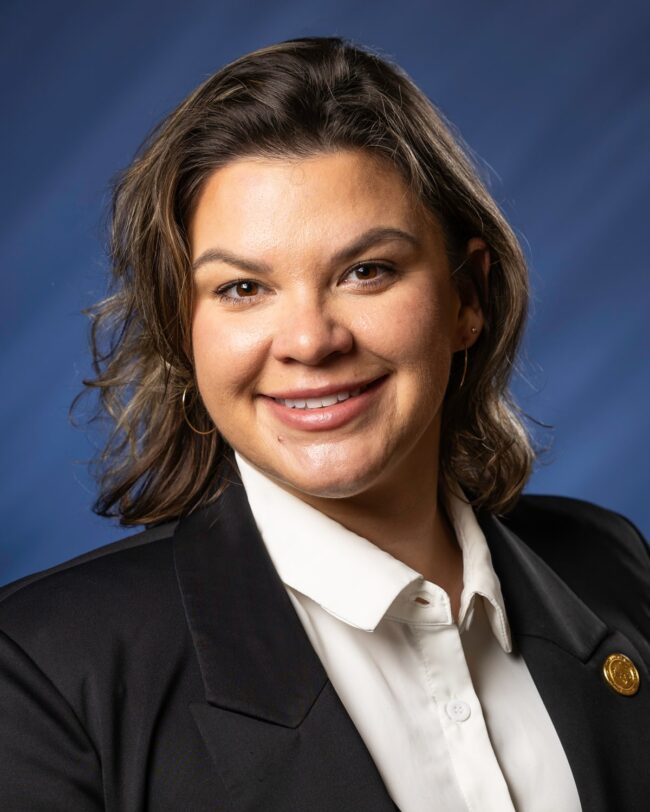
Bauer said now lawmakers must take steps to reduce firefighters’ risk of PFAS exposure. However, they have failed to take those steps or make any other attempts to regulate PFAS.
This session, Bauer co-authored House Bill 1110, an attempt to protect Hoosiers from PFAS contamination in their drinking water, but the legislation failed. It also called for those who manufacture PFAS chemicals and their products to prevent contamination. But the House Environmental Affairs Committee only met once this session, and that bill is not moving forward.
Her colleague, Rep. Randy Norvak, D-Michigan City, authored House Bill 1190, which would have recognized certain PFAS-related health conditions as being caused on the job, easing firefighters’ access to disability benefits. The bill never made it out of the House Veterans Affairs and Public Safety Committee.
Even as legislation fails, several Indiana firefighters who have faced cancers largely attributed to PFAS have returned from tough medical battles to serve their communities not just as firefighters but as advocates for state action.
Fire Chief Eric Funkhouser faced brain cancer
Eric Funkhouser, fire chief for the Bargersville Community Fire Department, was driving to Walmart with his wife in September 2024 when, age 46, he had a seizure. Doctors found a large mass on his brain later determined to be a malignant tumor that had been growing for four or five years.
Funkhouser went from yearly physicals to what he describes as practically living in a doctor’s office as he visited radiologists, neurosurgeons and oncologists. Today he has a scar on his head from where Franiscan Hospital surgeons removed a piece of his brain the size of his fist, but the incident left other scars that may not be visible but cut just as deep nearly two years out from that major surgery.
“Going to thinking you’re perfectly healthy, you know, 25 years into your career, to dropping and having cancer,” Funkhouser said. “It changes your life.”
Talking about it still brings up some strong emotions.
He spent 13 days in the hospital and then three months in outpatient rehab, dealing with the effects of left side neglect, which is when the brain doesn’t recognize the left side of the body. He remains on seizure medication and has to get an MRI every three months.
“I live on like three months at a time. So, you go in, you get good news, you’re ecstatic, you’re happy. Three months later, you know you’re going right back in to be tested to see if it’s still growing,” Funkhouser said.
Workers’ compensation claimsprovide financial support to employees with injuries or illnesses from their jobs, but Funkhouser’s claim was denied when the insurance company deemed his cancer hereditary—even though Funkhouser’s neurosurgeon said the cancer could not be hereditary since he had no family history of it.
Due to the limited testing during the IDHS PFAS pilot study, Funkhouser declined testing so that others in his department had the opportunity; they all were found with PFAS exposure, one at high risk, another at moderate and the third at low risk for facing adverse effects from PFAS.
With the forever chemicals found in almost every item that firefighters use, Funkhouser says his exposure is likely.
“It’s in your everyday life in the fire service,” Funkhouser said.
He is no stranger to the milky, white, carcinogenic AFF foam, which he and his team would walk through during training and on calls, unaware of the dangers.
“We would play in it,” he said.
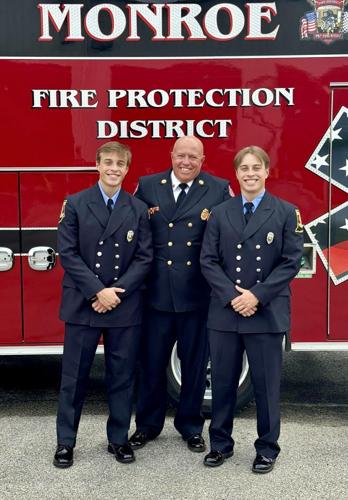
Fifteen months after his brain surgery, with no cancer progression, he returned to his position leading the Bargersville Fire Department, adding to his 27 years in the fire service, which began in 1999. He said he joined knowing there was a risk of dying battling a fire but not battling cancer—and now he has two sons going into the fire service.
That’s why he and his family created the Funkcancer Foundation, to help ease the financial burden for families who, like Funkhouser, face sudden medical diagnoses.
“The whole world stopped when I dropped, you know what I mean, and people were doing anything they could to help—showing up in the hospital, donating money, food,” Funkhouser said. “So, now my job is just to do whatever I can to pay it all back.”
He also continues searching for new gear with lower levels of PFAS but said it is often expensive and less enduring. At the same time, Funkhouser is asking architects how the Bargersville Community Fire Department fire station can be designed to reduce PFAS exposure.
But he said there are plenty of departments across the state that cannot afford to purchase this safer equipment or find safer alternatives to their stations.
“It’s not if, it’s when in the fire service anymore—when you’re going to get cancer,” Funkhouse said.
Lt. Jason Gibbons life is dictated by his bladder
Lt. Jason Gibbons, a Westfield firefighter, lives his life on a timer. It rings every four hours when he has to urinate.
After getting bladder cancer in October 2024, Gibbons’ prostate, bladder and 21 pelvic lymph nodes were removed and a new bladder constructed from two feet of his intestines.
He said he came home hooked up to four separate bags and spent his recovery doing pelvic floor therapy, which women frequently do after childbirth, so that he could urinate without the muscle that voluntarily pushes out urine.
Returned to work, Gibbons plans his entire day around when he needs to pee. The sporadic nature of calls, which could happen any minute, makes this all the more difficult. A call lasting for several hours has him scrambling to find a place to urinate.
That is not a common experience for someone just 45 like Gibbons. The majority of bladder cancer cases are in individuals older than 65, and the greatest risk factor is smoking, something he doesn’t do. He said he is relatively in shape and only takes medication for high blood pressure, and his urologist was shocked to discover his diagnosis until he learned that he was a firefighter.
“‘OK, that’s all I needed to hear,’” Gibbons recalls his urologist saying. “‘That’s why you got bladder cancer in your 40s.’”
As a firefighter, Gibbons is constantly exposed to chemicals, from the PFAS used in his gear to the carcinogens released when certain things burn.
“All that stuff soaking through our gear, soaking into our skin, right on top of the gear we wear every day that’s supposed to protect us is also killing us because the PFAS is in all of our equipment,” he said. “It’s everywhere you go. Basically, you can’t get away from it.”
Gibbons has faced that exposure for 20 years as a full-time firefighter, 35 counting his time as a volunteer.
A colleague in his department was diagnosed with testicular cancer.
“We were both going through chemo at the same time and kind of swapping war stories about, ‘How’s it treating you this week?’” he said.
Insurance covered some of Gibbons’ medical costs, with him paying a $5,000 deductible upon first being diagnosed. His deductible started over in January of this year. A check from the local union, Hamilton County Professional Fire Fighters, and another from the Shield 23 Foundation, an Illinois organization that raises funds for firefighters battling cancer, also helped out.
Still, after Gibbons’ wife got appendicitis and needed her gallbladder removed, combined with the constant scans and tests Gibbons must get for the next five years, the medical bills continue to climb. Additionally, a visit to the dermatologist revealed that Gibbons had a malignant melanoma, which had to be surgically removed.
He said he treats these obstacles the same way he treats work: steps that must be dealt with one at a time.
“That kind of helps me mentally, not just get bogged down into that hole, like feel sorry for myself and all this is on my plate and how do I even handle it,” he said. “I never had that, like, impending doom or, ‘Oh my God, I have cancer. I’m gonna die.’”
Today he is cancer free, but Gibbons continues to battle fires, saving communities and lives doing the very thing that so drastically changed his life.
“Every time I go into that place, it’s just, it’s a reminder of what it did to me,” he said. “It’s just a bunch of stuff running through your brain at that time. It’s just like, man, I don’t want this again. I don’t want cancer again from this place.”
Returning to work, however, and being around others provides some sense of normalcy, and Gibbons said he still doesn’t regret the decision he made years ago to become a first responder. He said he took the job knowing the risks—but he wasn’t thinking of cancer when he did so, and neither are other firefighters.
“There needs to be more conversation about occupational cancer,” he said.
Gibbons also said he wants more grants and action from the state to help smaller cities that cannot afford safer alternatives to PFAS equipment.
His decision to return to work, more than anything, is based on the importance of the job and his stubbornness to live life how he wants.
“This isn’t what’s going to determine when I don’t work here anymore. Like, I’m going to be the one that says I’m ready to retire or I’m ready to not do this. … I don’t want this to be the thing that gets me,” he said.
“It already interrupted my life, but it wasn’t going to determine the outcome.”
Advocating for PFAS-free equipment
Like many others across the state, the South Bend Fire Department is no stranger to AFF foam, which its firefighters found themselves knee-, elbow- and sometimes neck-deep in before it was replaced with an alternative . They breathed and ingested it, and later, several South Bend firefighters faced various cancers, including prostate, esophageal and brain cancer.
The South Bend cancer diagnoses were part of Rep. Bauer’s inspiration to author legislation in 2023 for a PFAS pilot study in firefighters, which came out in 2025.
Carl Buchanon, fire chief for the South Bend Fire Department, was diagnosed with prostate cancer even though, similar to other cases, he does not smoke or have a family history of it.
“When you’re telling me that you’ve already proven that [AFF foam] and our structural turnout gear is a means of getting cancer, then it only makes sense that that’s probably where I got it from,” he said.
Buchanon underwent total prostate removal. He is currently cancer free but must get checked every three months.
“I wasn’t depressed. I was just, you know, I was glad to have the information,” Buchanan said. “I didn’t see it as OK, this is the end of me. … I didn’t just say, ‘Oh, woe is me, you know, I’ve got cancer.’”
Buchanan has chosen to return to work, which is mainly administrative. Being a firefighter is something he has always felt “chosen to do.”
“There was never even a thought of cancer,” he said.
With 40 years in the fire service, he plans to retire in 2028 unless further health complications arise. As he continues to lead the South Bend department, he also continues to be vocal about this issue, inspiring others to get themselves checked out and working on preventative measures.
But he does not believe that responsibility should fall on the individual firefighter. Buchanan said state government has an obligation to address this issue—and manufacturers should be held responsible to make safer equipment and gear.
But tackling this isn’t so easy.
Obstacles like Senate Bill 1 have “chopped” the budget for every municipality, Gibbons of the Westfield Fire Department said, limiting expenditures on safer gear and equipment for fire departments.
Bauer said some fire departments have made attempts to get PFAS-free gear, but right now, the options are unaffordable.
Several lawsuits involving cases like these Indiana firefighters’ are already in motion across the nation. As research continues, the link between rare cancers in firefighters and PFAS in the gear and equipment meant to protect them continues to gain traction.
Bauer said she has already engaged with city governments, industries, utilities and unions like the Professional Fire Fighters Union of Indiana. In addition, she said that there is still an opportunity to expand testing from the IDHS study so that first responders can receive additional health care and preventative measures.
The desire to solve this problem is there, but first responders like Funkhouser of the Bargersville Fire Department are still denied workers’ compensation, and the legislation designed to help out—like HB 1190—remains unsuccessful.
These setbacks haven’t prevented Hoosier firefighters from returning to work while advocating for an environment as safe as possible in such a risky profession.
“I think that this proves we need to listen to firefighters and follow the science,” Bauer said. “Hopefully it’ll allow us to act before more harm is done and before we have even greater crisis with more of these diagnoses within the fire service that can prove fatal and have a really heartbreaking and rippling effect on the industry.”