By Marilyn Odendahl
The Indiana Citizen
February 17, 2026
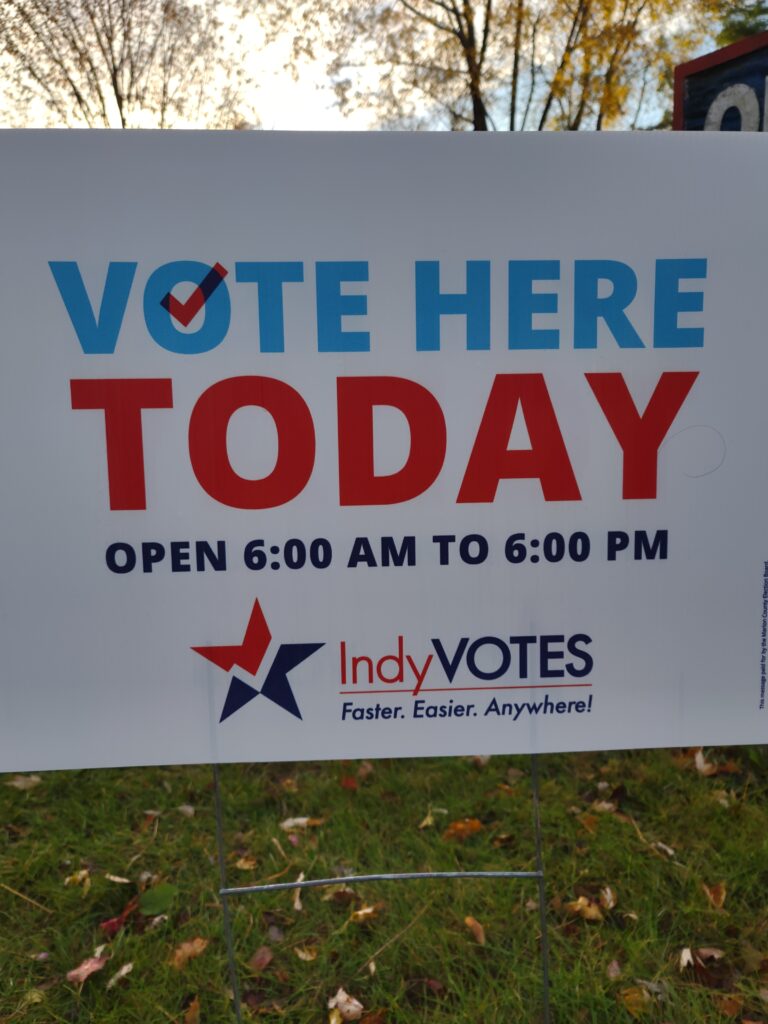
Ignoring calls for public input, the Senate Elections Committee passed an amendment during its hearing Monday morning that would reduce the state’s early-voting period from 28 days to 16 days.
Sen. Mike Gaskill, committee chair, offered the new provision to House Bill 1359. Although the bill’s author, Rep. Timothy Wesco, R-Osceola, did not attend the hearing, Gaskill, who is the Senate sponsor of the measure, told the committee Wesco had approved of the early-voting language.
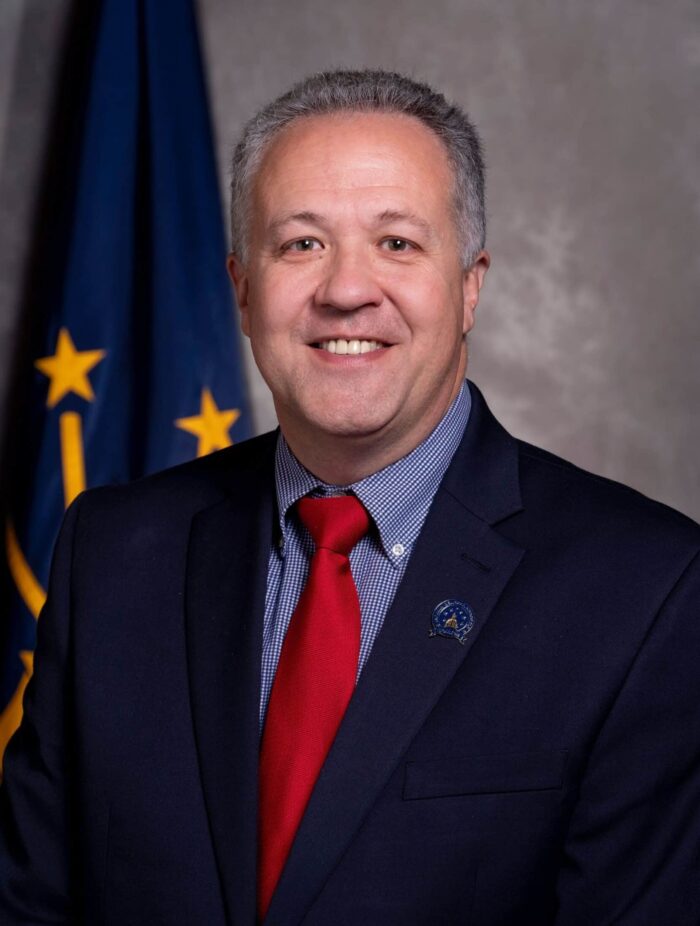
Gaskill, R-Pendleton, said shortening the early-voting cycle will save money, lessen the burden on county clerks administering the elections and put Indiana more in line with most other states who open their polls roughly two weeks before the primary and general elections.
“It’s Election Day, not Election Month,” Gaskill told the committee.
However, Democratic Sens. J.D. Ford and Fady Qaddoura, both of Indianapolis, along with Republican Sen. Greg Walker, of Columbus, opposed the amendment. Ford and Qaddoura cited voter-turnout data and raised concerns about reduced accessibility to the ballot box with the possibility of some voters being disenfranchised altogether.
Qaddoura said the amendment was a “reverse of a good policy.” He questioned the decision to save dollars at the potential expense of voter participation, especially when Indiana’s turnout rate is among the lowest in the country.
“It doesn’t give anybody any advantage, but it just makes it more convenient to vote,” Qaddoura said of a 28-day early-voting period. “I will always be on the side of making it more convenient for voters to vote.”
This is not the first time the legislature has considered shortening the early-voting time frame. During the 2025 session, Sen. Gary Byrne, R-Byrneville, introduced Senate Bill 284, which originally slashed early voting to seven days before the election, but was later amended to expand pre-Election Day in-person voting to 14 days. SB 284 was given a hearing and passed the Senate Elections Committee on a 6-to-3 vote, before it stalled, never reaching the Senate floor for a second reading.
Gaskill’s amendment to HB 1359 revived the debate over how long the early-voting period should be in Indiana. The bill, as written, focused on the process for counting ballots in counties that use optical-scanning equipment, rather than addressing the days and hours for voting.
Gaskill did not say why he chose to author the amendment and why he was attaching it to HB 1359. In response to Walker questioning if the new provision was germane to the bill, Gaskill responded that the legal staff of the Republican caucus said the amendment was relevant to the underlying bill.
Although Walker joined Ford and Qaddoura in opposing the amendment, he joined the other Republicans who voted to pass the amended bill on a 7-to-2 vote and send the measure to the full Senate.
Both Qaddoura and Ford pointed to voter-turnout data to underscore the number of Hoosiers who have cast a ballot in the first two weeks of early-voting periods in prior elections. Of the 538,000 Hoosiers who voted early and in-person in 2022, 90,000, or 16.7%, voted in the first two weeks that early voting was open. Likewise, 1.4 million Hoosiers cast an in-person ballot during early voting in 2024, of which 309,000, or 22.07%, voted in the two weeks that the amended HB 1359 would remove.
Ford was concerned about the impact a shorter time frame would have on the voting process and that early voters might not be able to participate in the election.
“I think this is going to increase those lines and put some really heavy burdens on our clerks,” Ford said. “Essentially, this is going to take away from working-class folks who need that time because they might have an inflexible work schedule or caregiving responsibilities or even transportation issues for that matter.”
Qaddoura said he would support the amended HB 1359 if the data showed that thousands of Hoosiers have abused the election system by voting illegally. However, based on his calculations, he said, only two or three voter-fraud cases have been reported in the state within the past decade.
Gaskill said his amendment was not seeking a remedy for election fraud. He characterized the early-voting provision as a “process improvement.”
Qaddoura disagreed.
“From an accounting perspective, if it’s not broken, it doesn’t need to be fixed,” Qaddoura said. “If the auditors tell you it is working, you stick with it. And the auditors of our election, so far, tell us that the process is working.”
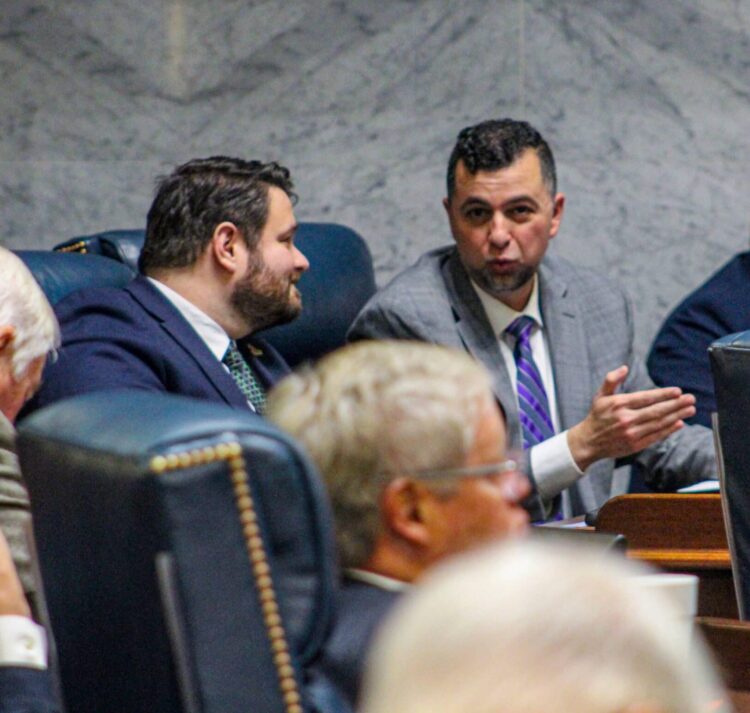
Ford called the amendment a “pretty substantial policy shift” and advocated for delaying the vote until after taking public testimony. Gaskill brushed off the suggestion, saying members of the public had provided their input on reducing early voting last year when the committee heard Byrne’s bill, SB 284.
During that debate in February 2025, six people testified against SB 284 and only Indiana Secretary of State Diego Morales’ office supported the measure.
Opponents of Byrne’s bill said limiting early voting would create another barrier to the ballot box in a state that already struggles with low voter turnout. They also noted Hoosiers favor the 28-day window and slicing the time down to 14 days would create longer lines, which would be particularly harmful to the elderly and disabled voters.
“It is one of the few things that Indiana does right when it comes to election policy, so it’s not broken,” Julia Vaughn, executive director of Common Cause Indiana, said of early voting. “Please don’t fix it.”
Kegan Prentice, legislative director for the Indiana secretary of state, pointed to neighboring states like Michigan, Illinois and Kentucky that all open their polls for fewer days than Indiana prior to primary and general elections. Yet, he agreed with the opponents that any cut to the number of early-voting days in Indiana should be offset by making more voting sites available.
“There needs to be more of a balance here,” Prentice said. “Our only suggestion to the bill is you should look at a mandated amount of early-voting locations that would be needed per registered voter.”
Gaskill’s amendment to HB 1359 does not include any language about counties opening more early-voting sites.
Even though Gaskill did not take testimony, voting-rights advocates blasted the amendment as a “transparent effort to suppress voter participation.” The All IN For Democracy coalition issued a press release asking Hoosiers to demand that their state representatives and senators oppose this “last-minute, anti-democratic maneuver” and vote against any legislation that would reduce the 28-day early-voting period.
“Lawmakers have had the better part of two months to introduce this language, but they chose instead to sneak it into an unrelated bill with less than two weeks left,” Megan Robertson, executive director of Indiana Conservation Voters, said in the press release. “Hoosiers need to raise their voices and condemn this last-minute attempt to reduce opportunities for voters to vote in upcoming elections.”
All IN for Democracy coalition members include Common Cause of Indiana, League of Women Voters of Indiana, Indiana Conservation Voters, Count Us IN, Hoosier Asian American Power, Indiana Vote By Mail, MadVoters Indiana, Citizens Action Coalition, Chicago Lawyers Committee for Civil Rights, Indiana Voices, Indiana Alliance for Retired Americans, and Indiana Friends Committee on Legislation.
Dwight Adams, an editor and writer based in Indianapolis, edited this article. He is a former content editor, copy editor and digital producer at The Indianapolis Star and IndyStar.com, and worked as a planner for other newspapers, including the Louisville Courier Journal.
The Indiana Citizen is a nonpartisan, nonprofit platform dedicated to increasing the number of informed and engaged Hoosier citizens. We are operated by the Indiana Citizen Education Foundation, Inc., a 501(c)(3) public charity. For questions about the story, contact Marilyn Odendahl at marilyn.odendahl@indianacitizen.org