Her story was about some Afghan refugees she had hosted and helped.
Those refugees came here to escape the horrors of war and the depredations of government repression. As millions of people have before—including my ancestors and, quite possibly, yours—they came here because they saw the United States as a bastion of freedom, a nation that revered personal liberty.
The husband and father in the family holds down three jobs. It was while he was doing one of those jobs that he was pulled over by Immigration and Customs Enforcement—ICE—agents.
He wasn’t violating the speed limit or any other traffic law. Even if he had been, ICE isn’t the government entity to enforce those laws.
No, he was detained because he was of a darker complexion than the typical American of European ancestry.
After stopping him—again, without any evidence that he’d committed any crime—the agents forced him to take them to his house. They searched every room in the place, waking his wife and children in the process.
They walked through the family’s home, masked men carrying military-grade weapons and wearing tactical gear, on a fishing expedition. They terrified a hard-working and innocent family who just came here in search of freedom and a better life.
Again, the ICE agents did all this without a warrant or anything that even vaguely resembled probable cause.
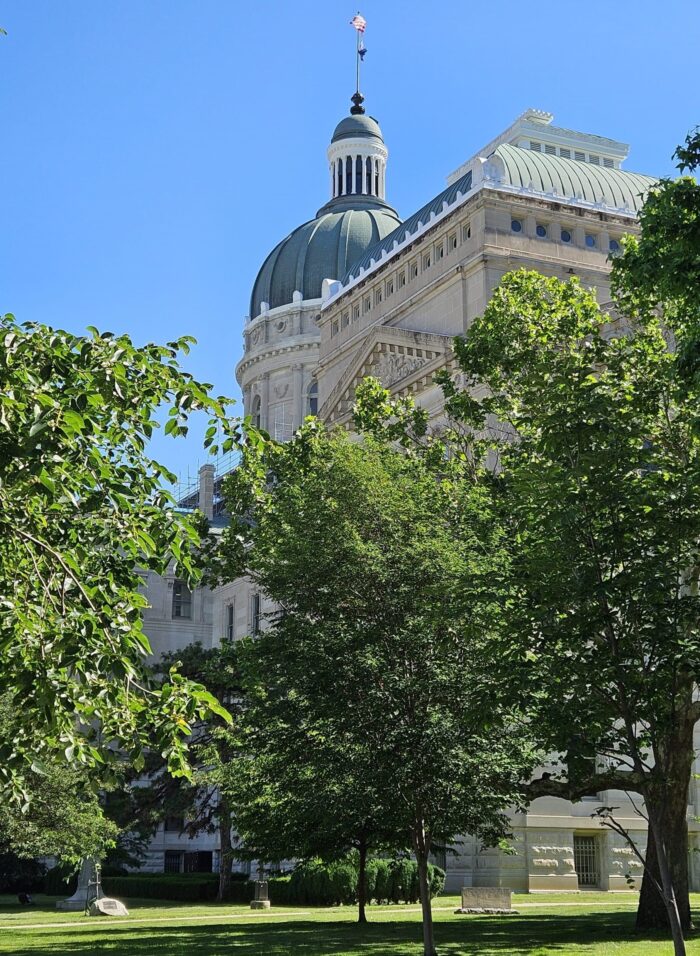
Around the time my friend was telling me this story, the Indiana House of Representatives voted—on largely partisan lines—to see that Hoosier students at Indiana public schools and universities can be subjected to the same treatment the Afghan refugees received.
Indiana Senate Bill 76 would require all state schools to collaborate with ICE, threaten school officials who don’t comply with lawsuits and enshrine Indiana Attorney General Todd Rokita with the authority to determine if probable cause exists in any conflict between ICE and a Hoosier school.
A couple of things make this bill interesting in an appalling sort of way.
The first is that the Republican legislators who support this measure seem completely oblivious to the irony of lawmakers voting for the law to be ignored. They also seem ignorant regarding the reality that the Indiana General Assembly doesn’t have the authority to override or ignore the Fourth Amendment to the U.S. Constitution.
The second is that these lawmakers—and our endlessly power-hungry attorney general—lack even a basic understanding of the separation of powers.
Judges and magistrates determine whether probable cause exists, not prosecutors or attorneys general. That’s a measure designed to prevent law enforcement officials—or, in this case, untrained paramilitary forces pretending to be law enforcement officials—from growing overzealous and abusing their authority.
That Rokita would be in favor of this isn’t surprising. He tends to like to create scenarios in which only his voice can be heard and his views can be considered. During the state constitutional dispute over whether the Indiana General Assembly could call itself or whether the governor had to do it—as the Indiana constitution requires—Rokita argued that he could serve as the lawyer for both the governor and the legislature, along with being the ultimate arbiter and judge in the dispute.
(An aside: Will there ever be a time when the Indiana Supreme Court will grow tired of the attorney general’s assertions that courts and judges don’t matter?)
Much of this would be almost laughably dumb—if it weren’t so tragic.
Our Bill of Rights is the bulwark of our liberties, our status as a free people. Its language and provisions restrict the power of government.
This was deliberate. The founders of this nation had good reason to distrust and fear unchecked government power.
That’s why they made constraining government a focus. They knew that, from time to time, ambitious elected officials would be eager to vote away liberties, so they took certain things off the table.
Because the Bill of Rights restrained government force, its protections apply to people regardless of whether they are U.S. citizens.
There was a time when the Republican Party—particularly the Indiana GOP—was among the most devoted defenders of individual liberty.
Now?
Not so much.