By Sydney Byerly
The Indiana Citizen
February 10, 2026
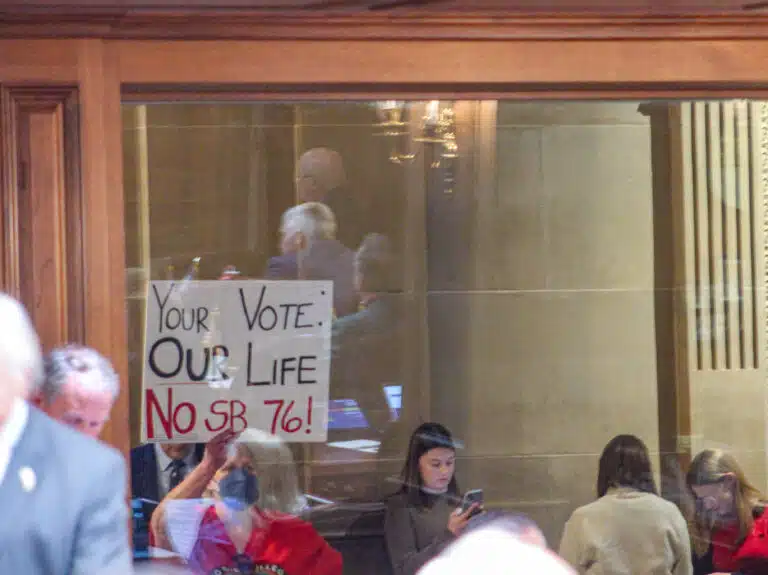
Indiana House Republicans advanced sweeping immigration legislation Tuesday that would require local governments, colleges and employers to cooperate with federal immigration enforcement — cementing the state’s alignment with President Donald Trump’s aggressive mass deportation agenda.
The House’s GOP supermajority batted away a series of Democratic amendments intended to water down the measure, setting up a final vote in the coming days.
The bill places Indiana squarely on the opposite end of the national immigration fight from Democratic-led states such as Minnesota, where resistance to Trump’s deportation efforts has triggered federal lawsuits, protests and national headlines.
Senate Bill 76 would strengthen Indiana’s existing anti-sanctuary framework by requiring local law enforcement agencies, courts and postsecondary institutions to cooperate with Immigration and Customs Enforcement detainer requests. Government entities that refuse could face lawsuits and civil penalties from the attorney general.
Employers could be sued by the attorney general for knowingly hiring unauthorized workers, with whistleblower protections for employees who report violations, and the bill expands prosecutors’ authority to pursue human trafficking sites as civil nuisance cases and recover investigative and legal costs.
Supporters framed the legislation as necessary to prevent local officials from undermining federal deportation efforts. Opponents argued it requires institutions with no role in immigration enforcement to take part in carrying out the president’s agenda.
“Back off this excessive deputization,” Rep. Ed Delaney, D-Indianapolis, said during floor debate. “Protect these places … let them be a place of peace, of normal conduct.”
Lawmakers filed 39 amendments for consideration on the House floor, with Democrats offering most of them in an effort to narrow the bill’s reach and highlight civil rights concerns. Republicans largely rejected those proposals, casting many as political messaging ahead of the midterms rather than substantive policy fixes.
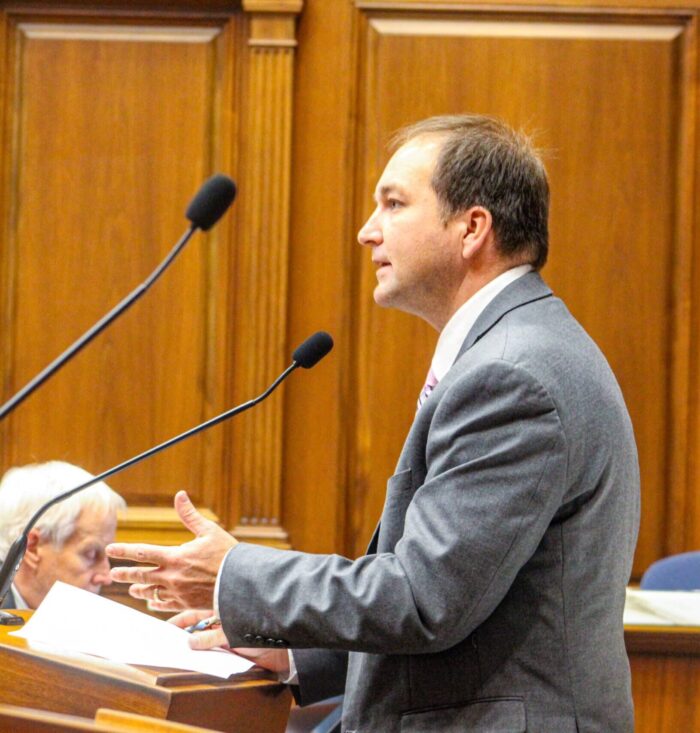
Rep. J.D. Prescott, the Union City Republican sponsor of the bill, repeatedly urged House members to oppose Democratic amendments he argued were unnecessary or would weaken enforcement provisions.
Still, some Republicans acknowledged tensions between aggressive immigration enforcement and Indiana’s labor needs.
Rep. Earl Harris Jr., D-East Chicago, warned the bill’s employment enforcement language could destabilize sectors such as manufacturing and agriculture and said lawmakers had not adequately vetted the consequences with major employers.
“As a heavy manufacturing and agriculture state, we need more robust discussion and vetting from our state’s biggest employers before we blow up the state’s industries,” Harris said.
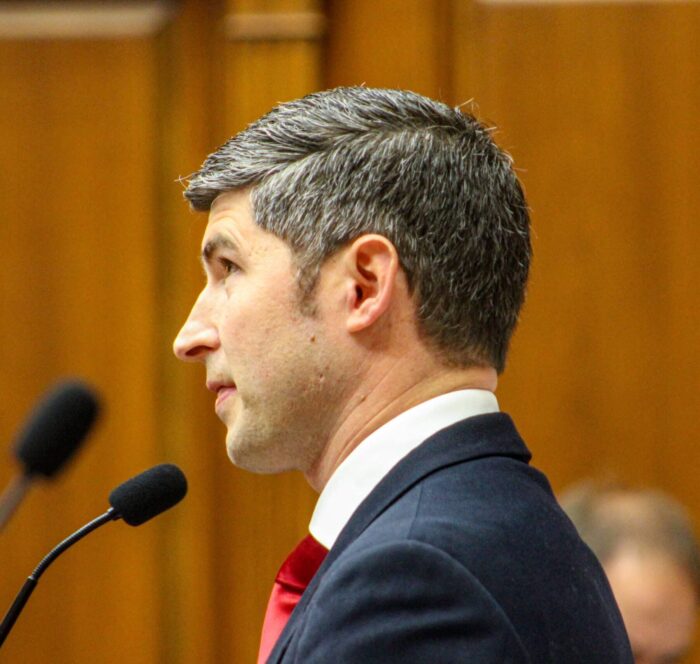
Rep. Tim Wesco, R-Osceola, argued Indiana should not attempt to enforce federal employment eligibility laws and warned of worker shortages and economic consequences.
Wesco cited labor shortages across Indiana’s economy and pointed to undocumented youth who grew up in the state as an untapped workforce.
“We do not presently have a shortage of jobs, but rather workers and employable people,” Wesco said, citing roughly 84,000 open job postings statewide. “We’ve invested in these young people, and we need them in our state.”
He argued the federal government should handle employment enforcement, saying it was “unnecessary and unhelpful for our state to seek to enforce federal employment eligibility laws ourselves.” Wesco also noted that even Trump had acknowledged aggressive immigration policy had hurt farmers and hospitality employers.
While Indianapolis already honors federal immigration detainers for up to 48 hours, SB 76 is designed to prevent any local pushback and target jurisdictions that might adopt sanctuary-style policies in the future. That includes county jails, campus police departments and local agencies that could limit collaboration with federal authorities.
One late amendment added a narrow restriction preventing officials from using public benefits data — such as Medicaid records — to investigate or penalize individuals.
Indiana’s move comes amid an intensifying national showdown over immigration enforcement, as Republican-led states seek to support Trump’s deportation campaign and Democratic-led states push back.
Minnesota has become a flashpoint in that conflict, with local officials resisting cooperation with federal authorities and Trump allies accusing Democratic leaders of obstructing deportation efforts.
The House could cast its final vote on the bill in the coming days. The Senate would need to sign off again before it goes to Gov. Mike Braun’s desk to be signed into law.
Sydney Byerly is a political reporter who grew up in New Albany, Indiana. Before joining The Citizen, Sydney reported news for TheStatehouseFile.com and most recently managed and edited The Corydon Democrat & Clarion News in southern Indiana. She earned her bachelor’s in journalism at Franklin College’s Pulliam School of Journalism (‘Sco Griz!).
The Indiana Citizen is a nonpartisan, nonprofit platform dedicated to increasing the number of informed and engaged Hoosier citizens. We are operated by the Indiana Citizen Education Foundation, Inc., a 501(c)(3) public charity. For questions about the story, contact Marilyn Odendahl at marilyn.odendahl@indianacitizen.org.