This story was originally published by TheStatehouseFile.com.
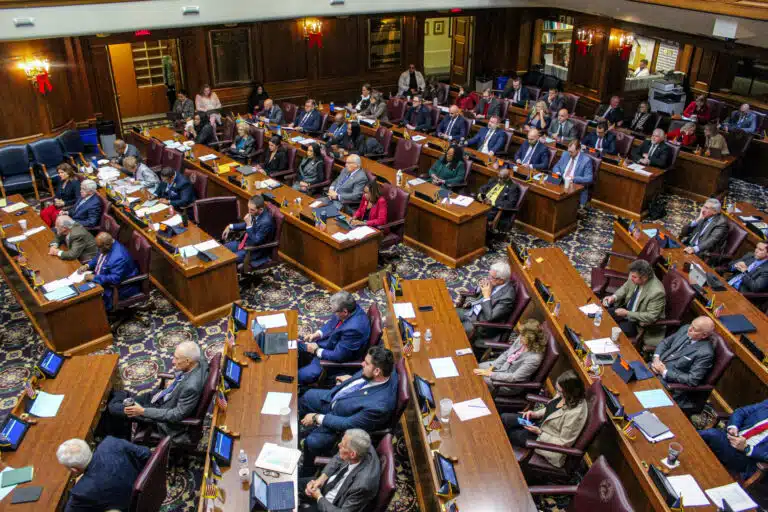
Indiana’s lawmakers have proposed more than 500 bills—from education to taxes to government policy—for 2026’s short legislative session.
This years’ session will end earlier than previous short sessions due to the legislature meeting in December 2025 in a failed attempt to establish mid-cycle congressional redistricting.
“Typically short-sessions are a ‘do no harm’ period where legislators address relatively non-controversial but important measures before dismissing the chambers and going out to campaign for reelection,” said Laura Wilson, political science professor at the University of Indianapolis.
“I would emphasize both of these elements (avoiding controversy and acting expediently) are more important for this particular session since the redistricting conversation drew lawmakers back in early December amid highly publicized debate.”
Education
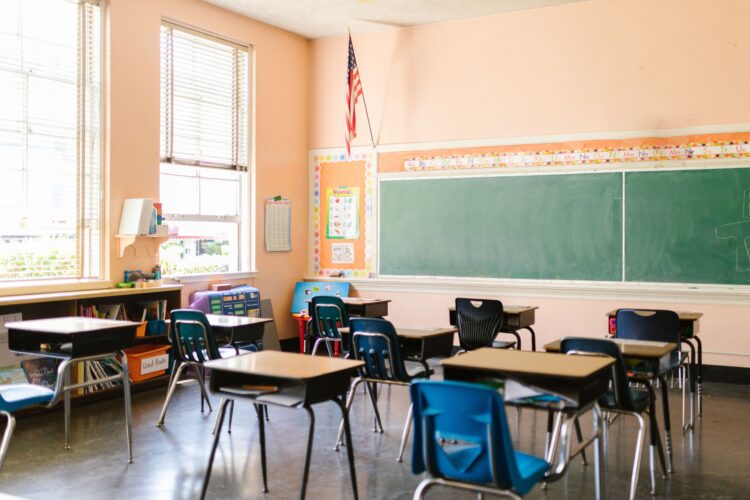
Over 20 bills were assigned to the House Education Committee for the 2026 session. House Bill 1145, authored by Rep. Mike Karickhoff, R-Kokomo, would bring a 13th paycheck to teachers and state workers. The bill would cost the state of Indiana roughly $33.6 million for calendar year 2026 to provide extra financial support for long-term public employees.
There are many proposed changes to K-12 students’ potential school experience and learning environment. HB 1086 would require all classrooms and libraries in public schools to display a poster of the 10 Commandments. This bill would toe the line with the First Amendment Establishment Clause stating that the government can not “establish” a religion.
Students attending public schools in Indiana could be subject to keeping their cell phones away for the entire duration of the school day. Currently, students are prohibited from using their cell phones during class time, but the rule is lifted during times such as lunch, recess, passing periods, and before and after school hours. However, HB 1034 would eliminate all cell phone usage for students during the entire duration of a school day.
“Many school districts, teachers and parents have shown concerns that students still utilize their phones during the school day and that the enforcement of the current rule is not universal across the board (that is to say, in some school districts or classrooms it is very strictly applied where others it is largely ignored),” Wilson said.
“I would add, there is a lot of great research that suggests minimized student cell phone use is related to higher test scores, fewer reports of bullying and an increase in positive socialization opportunities.”
Corrections and criminal law
The Indiana Senate looks to tighten the rules on firearm storage and usage, with proposed bills such as Senate Bill 130 covering proper firearm storage, and SB 16, which proposes that any “privately made firearm” is considered a Level 5 felony.
A bill has also been proposed to modify the way Indiana carries out the death penalty. SB 11, authored by Sen. Michael Young, R-Indianapolis, would allow the state to carry out the death penalty via firing squad in addition to lethal injection.
A stricter approach to handling riots or disorderly conduct, specifically committed by those wearing masks, is being discussed. SB 73, authored by Sen. Gary Byrne, R-Byrneville, would make wearing a mask to a public assembly or riot a Class C misdemeanor and could result in the levying of a Level 6 felony if the crime is committed more than once.
Ways and means
Over 50 proposed bills have been sent to the House Ways and Means committee for this year’s 2026 short session.
They range in topic from property, income and sales taxes to child-care funding to exemptions and reductions in property tax for qualified veterans.
Elections
SB 53, authored by Sens. Fady Qaddoura, D-Indianapolis, and Greg Walker, R-Columbus, seeks to ensure that December’s failed attempt to redraw Indiana’s congressional districts will not happen again.
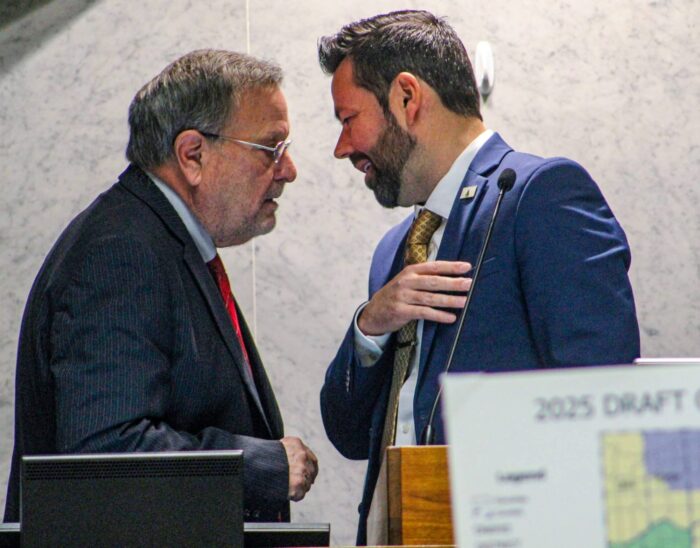
HB 1022, authored by Rep. Danny Lopez, R-Carmel, would require a candidate for governor nominated at a primary election to also name a lieutenant governor to run jointly—unlike what happened with Gov. Mike Braun and Lt. Gov. Micah Beckwith in 2024.
Rep. Cory Criswell, R-New Castle, has proposed HB 1133, which would eliminate all straight-ticket voting.
Health care
With more than 50 combined bills from the Senate and the House, public health is an important topic in 2026’s short session. Multiple bills, including HB 1074, HB 1012 and HB 1028, include strict Medicaid coverage requirements related to social needs.
Rep. Lorissa Sweet, R-Wabash, alongside Rep. Lindsay Patterson, R-Patterson, and Rep. Becky Cash, R-Zionsville, has proposed HB 1255, which says the courts do not have jurisdiction to withdraw life-sustaining treatment for a minor.
Rep. Matt Pierce has introduced HB 1011, a bill that would allow patients with a terminal illness to request medication to self-administer and bring about their own death.
Child care
There is also an emphasis on the Department of Child Services in this year’s session.
Sen. Kyle Walker, R-Lawrence, Sen. Greg Walker, R-Columbus, and Sen Greg Goode, R-Terre Haute, have presented SB 15, a “foster youth bill of rights,” which summarizes the rights and responsibilities of foster children that would be updated periodically. DCS would be required to publish the statement on the department’s website.
Sen. Tyler Johnson, R-Leo, has authored SB 171, which would allow a court to grant post-adoption contact privileges if the child were at least 12 months old. Currently, the law requires the child to be at least 2.
The House’s bill filing deadline was Wednesday, and the Senate’s was Friday. The session is anticipated to end on Feb. 27.